
Historical Ritual Archive
A royal evocation of desire, wrath, strategy and the furnace beneath disciplined intelligence.
Daemonology profile: Read the complete Daemonology profile of Asmodeus
This ceremonial dossier presents the rite as a single complete operation organized around the nature of Asmodeus, the purpose of the petition, the atmosphere of manifestation and the conditions required for a decisive closure. Its tools, timings, purifications, offerings, formulas, signs, petitions and warnings form one continuous ritual architecture.
The Power Being Addressed
Asmodeus is approached here as Great King of the Goetia, lord of desire, vengeance, games of chance and hidden arts. The rite does not treat this presence as a decorative symbol or an interchangeable spirit. Every object, color, timing and spoken demand is intended to align the chamber with a distinct intelligence.
Asmodeus is proud, strategic, sensual and violently perceptive. He is said to detect hypocrisy immediately, especially when desire is disguised as piety. His manner can be regal and instructive, then suddenly mocking when the seeker lies about motive.
Why This Rite Exists
The operation creates a controlled passage from ordinary consciousness into the domain attributed to Asmodeus. Preparation separates the practitioner from distraction. The central rite gives the force a name, image and point of concentration. The petition defines the desired exchange. Closure prevents the atmosphere of the operation from spreading without limit into ordinary life.
The rite should be read as one complete structure. Removing the preparatory discipline while retaining the demand weakens the threshold. Repeating the invocation without closure prolongs pressure without giving it a boundary.
The Atmosphere of Manifestation
Heat accumulates without an obvious source. The room may feel crowded by three conflicting perspectives: animal force, human intelligence and sacrificial authority. Reports describe flame imagery, the smell of iron or smoke, pressure in the jaw, and dreams filled with red courts, gambling tables or burning roads.
Manifestation does not need to be theatrical to be powerful. A shift in temperature, sound, dream, internal speech, posture or emotional pressure may become the first indication that the operation has crossed from preparation into contact. The traditional record expects attention rather than panic.
Sigil of Asmodeus
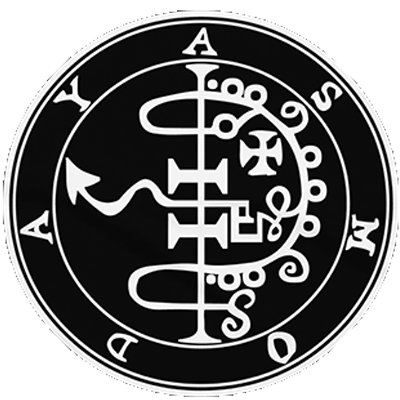
Sigil of Asmodeus. Traditionally drawn on parchment and placed at the centre of the rite as the principal visual focus for the invocation.
Personality and Ritual Conduct
Asmodeus is proud, strategic, sensual and violently perceptive. He is said to detect hypocrisy immediately, especially when desire is disguised as piety. His manner can be regal and instructive, then suddenly mocking when the seeker lies about motive.
The correct ritual posture is neither pleading nor empty aggression. The practitioner enters with a defined purpose, speaks without contradiction and does not improvise new promises under emotional pressure. The entity's personality shapes the ordeal: Asmodeus is not expected to respond like another king, prince or adversarial power.
The Rite: Full Ceremonial Sequence
The rite proceeds through the following sequence of preparation, construction, address, petition, recognition, exchange and dismissal.
Who is Asmodeus?
Asmodeus (also spelled Asmodeus or Asmoday) is a prominent demon in Abrahamic demonology, appearing in texts like the Book of Tobit (where he is a jealous spirit), the Talmud, and grimoires such as the Lesser Key of Solomon (Goetia). He is often depicted as a king of hell, associated with wrath, lust, gambling, and vengeance. In the Goetia, he is the 32nd spirit, commanding 72 legions of demons, and appears as a three-headed being (bull, man, ram) with a serpent's tail, goose feet, and flames from his mouth. Summoners traditionally seek him for knowledge of sciences, arts, and uncovering hidden treasures, but his nature demands respect to avoid backlash.
A Modern Occult Ritual for Summoning Asmodeus
Traditional grimoires like the Goetia outline complex evocations involving circles of protection, divine names, and sigils, but these can be elaborate and intimidating. A more accessible, contemporary adaptation comes from the Terra Incognita Coven, blending reverence with symbolic elements. This ritual focuses on intention, offerings, and a protective mindset rather than strict medieval formalism.
Preparations and Best Timing
Timing: Perform on a Saturday (ruled by Saturn, aligning with discipline and power) at midnight during a waning moon, when barriers between worlds are said to thin.
Mindset and Cleansing: Meditate on your clear intentions (e.g., seeking wisdom on desires or hidden knowledge). Fast lightly or avoid heavy foods for purity. Cleanse yourself and the space with a ritual bath or smudging (using sage or incense) to remove negative energies.
Setting: Choose a private, quiet room. Create a sacred circle using salt or chalk for protection. Decorate with symbols of passion and power, like red fabrics or images evoking lust/vengeance.
Materials Needed
- Sigil of Asmodeus (a traditional seal, easily found online—draw or print it).
- Red or black candles (for passion and mystery).
- Incense (patchouli or dragon's blood for his fiery essence).
- Offerings: Fine wine/spirits, spicy foods, precious stones (e.g., garnet), erotic art/symbols, or a handwritten vow of respect. Fire elements like a small flame are ideal.
Step-by-Step Ritual
- Set Up the Space: At midnight, light the candles and incense in your protected circle. – Place the sigil at the center as a gateway. Arrange offerings around it as tributes to his indulgent nature.
- Invoke with the Mantra: Stand or sit facing the sigil. Chant the following invocation mantra repeatedly (3–7 times) with focused conviction to call his presence:
"DIME NORE TAKA GETA ASMODEUS TARAI NITE SHARI MATO."
- Visualize flames and power drawing him near, speaking ancient names to honor his authority.
- Present Offerings: One by one, offer items while stating their purpose aloud, e.g., "I offer this wine to honor your dominion over desire, great Asmodeus." Pour libations or light a small fire if using flames. This builds rapport and shows submission.
- State Your Petition: Clearly voice your request, e.g., "Asmodeus, reveal to me the hidden truths of [specific desire/knowledge]." Be honest, specific, and grateful—avoid demands. Feel the energy shift; signs of presence might include temperature changes or intuitive insights (though these are subjective).
- Close the Ritual: Thank him: "I release you with gratitude, Asmodeus, and seal this working in harmony." Extinguish candles (snuff, don't blow), dismantle the circle, and ground yourself by eating something earthy (like bread) or journaling.
Aftercare
Journal any sensations, dreams, or synchronicities in the following days. Ground with nature walks or meditation. If anything feels off, perform a banishing ritual (e.g., Lesser Banishing Ritual of the Pentagram) or seek spiritual support.
Ritual Architecture
Separation
The preliminary phase cuts the practitioner away from ordinary communication, appetite, noise or emotional scattering. Fasting, bathing, isolation, abstinence, darkness or concentrated candle work function as signs that the rite has begun before the central invocation is spoken.
Construction of the Chamber
Candles, incense, sigil, water, salt, metals, stones, offerings and directional placement transform an ordinary room into a field organized around one power. The chamber should feel deliberate. Random decoration weakens the sense that every object has been placed for a reason.
Establishing the Point of Contact
The sigil, name, chant, enn, prayer or written petition supplies a fixed centre. Repetition is not mere volume. It narrows attention until the name ceases to feel like ordinary language and becomes the axis of the chamber.
The Petition
A petition should state one principal objective. It should avoid contradictory demands and avoid promises that cannot be kept. Wealth, knowledge, movement, revenge, protection, revelation or influence each create different consequences. The requested result should therefore include its boundaries.
Recognition of Presence
The rite enters its central phase when one or more of the expected signs becomes sustained: pressure, temperature change, altered candle behavior, internal speech, dreamlike imagery, animal symbolism, unusual sound or a sudden certainty that the chamber is no longer psychologically empty.
Exchange and Offering
An offering confirms that the operation is reciprocal. It may symbolize wealth, pleasure, fragrance, flame, blood-red color, water, metal, food, art, discipline or continued devotion. The meaning matters more than display. An offering should never be promised casually.
Dismissal and Return
The rite is incomplete until Asmodeus is formally thanked or dismissed according to the method preserved above. Candles are extinguished safely, windows opened where appropriate, remains removed, hands and face washed, and the result written before sleep or distraction changes memory.
Instruments and Their Symbolism
The sigil functions as the visual body of the named presence. The candle establishes color, rank, heat and duration. Incense gives the atmosphere a physical density and marks the transition from ordinary air into ritual air. Salt or the circle defines a limit. Water absorbs, reflects or carries emotional force. Metal, coin, stone or herb embodies the office of the entity.
The instrument is complete when it performs its role in the structure. More objects do not automatically produce greater power. A crowded altar can weaken the central image by dividing attention.
Timing and Threshold
The rite may specify midnight, planetary hours, a lunar phase, a zodiacal season or a sequence of preparatory days. Timing is not an ornament. It makes the operation feel as though the practitioner has entered an existing current rather than demanded that the current appear at convenience.
Where several timings appear in the original record, the practitioner should choose one coherent system and keep it throughout the operation rather than combining every correspondence into a single confused night.
Manifestation Signs
The signs attributed to Asmodeus include:
- a stable alteration of the room's emotional pressure;
- dreams or internal images repeating the entity's traditional form;
- unusual candle movement without a corresponding draft;
- sounds, animal motifs, smells or bodily sensations consistent with the entity's office;
- a response arising as a complete phrase rather than ordinary wandering thought;
- external events beginning to mirror the petition after the rite;
- resistance, fear or fascination intensifying at the exact point of contact.
One isolated sign may be meaningless. A pattern that repeats through the ritual, dream and aftermath carries greater weight inside the legend of the operation.
The Frightening Edge of the Rite
Asmodeus does not merely grant desire; he enlarges it until its structure is visible. Lust becomes possession, revenge becomes identity and ambition becomes a game that cannot be abandoned. The closing must restore command over appetite.
The danger is not limited to a hostile apparition. The deeper danger is transformation that feels useful while it is occurring. The practitioner may begin to imitate the spirit's temperament, reorganize life around the petition or interpret every event as part of the operation. That is why the dismissal and written closure are essential.
Failure Patterns
A rite is weakened when the practitioner changes the request repeatedly, abandons preparation, substitutes random symbols, recites without attention, continues after panic, promises impossible payment or refuses to close because no dramatic apparition appeared.
Failure can also appear as excess success: the requested current enters ordinary life faster or more strongly than expected. The record should therefore define what outcome counts as completion before the rite begins.
Completion and Aftermath
The operation is complete when the petition has been stated, the exchange acknowledged, the presence dismissed and the chamber returned to ordinary order. The practitioner should record:
- date and exact timing;
- preparatory discipline completed;
- tools and offerings used;
- words spoken;
- signs observed;
- dreams during the following nights;
- first external movement connected with the petition;
- any emotional or behavioral change;
- whether the promised offering or action was completed.
The aftermath belongs to the ritual. Results may arrive as opportunity, conflict, dream, warning, sudden knowledge, disappearance of an obstacle or an intensification that forces the seeker to confront the real shape of the request.
Final Warning
Asmodeus does not merely grant desire; he enlarges it until its structure is visible. Lust becomes possession, revenge becomes identity and ambition becomes a game that cannot be abandoned. The closing must restore command over appetite.
Do not leave the altar active indefinitely. Do not continue chanting after formal dismissal. Do not make a second petition simply because silence feels uncomfortable. The chamber must be returned to darkness, ordinary air and ordinary time.