
Historical Ritual Archive
A severe Goetic operation of logic, astronomy, pyromancy and the cruel old teacher who carries a weapon.
This rebuilt dossier preserves the entire operative substance of the earlier SatanWorld draft: the tools, sigil work, timings, purifications, chants, offerings, petitions, manifestations, dismissals and warnings remain present. The material has been reorganized so the rite unfolds as one deliberate descent rather than a loose list of instructions.
The Power Being Addressed
Furcas is approached as Fiftieth spirit of the Ars Goetia, a Knight commanding twenty legions. The operation is structured around that rank, office and manifestation.
Furcas is austere, scholarly and intolerant of intellectual laziness. He teaches through correction rather than comfort. The old man's cruelty is not random; it appears as the removal of excuses, weak arguments and false confidence.
Daemonology profile: Read the complete Daemonology profile of Furcas
Why the Rite Exists
The rite creates a threshold between ordinary life and the domain attributed to Furcas. Preparation separates the practitioner from distraction. The sigil, name and chant establish a centre. The petition shapes the encounter. The offering acknowledges exchange. Dismissal restores the chamber to ordinary time.
A summoning without preparation is only demand. A summoning without closure is pressure without boundary.
Personality and Ritual Conduct
Furcas is austere, scholarly and intolerant of intellectual laziness. He teaches through correction rather than comfort. The old man's cruelty is not random; it appears as the removal of excuses, weak arguments and false confidence.
The practitioner should speak with precision and avoid contradictory motives. The entity's traditional temperament determines the tone of the operation. Royal spirits are not approached like marquises, teachers are not addressed like destroyers, and powers of love, invisibility, storm, war or revelation do not answer through the same atmosphere.
The Atmosphere of Manifestation
The smell of smoke, old leather or cold iron may enter the room. Candle flames become unusually instructive, hands and palms draw attention, and manifestation is traditionally a hoary old man riding a pale horse and carrying a sharp weapon.
Manifestation may begin through changes in sound, heat, dream, pressure, candle behavior, animal imagery or internal speech. The legend of the rite does not require a full visible apparition before contact is recognized.
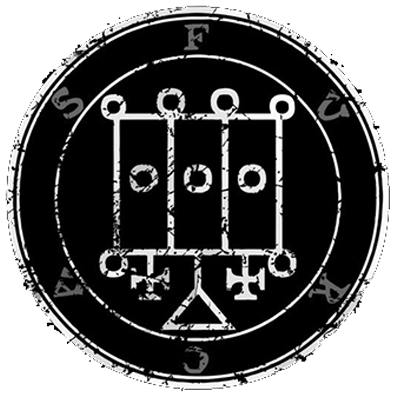
Sigil of Furcas
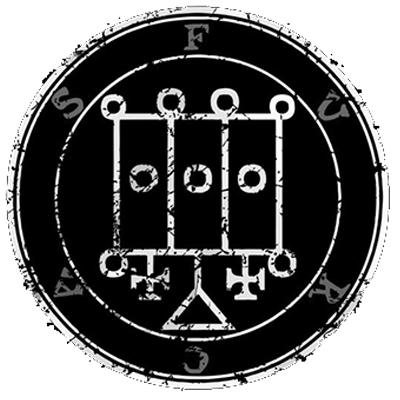
Sigil of Furcas. Traditionally drawn on parchment and placed at the centre of the rite as the principal visual focus for the invocation.
The Rite: Full Ceremonial Sequence
The following section preserves the original article's ritual content without omitting its operative details.
How to summon Furcas
How to summon Furcas
Furcas (also spelled Forcas or Forras) is a Great President of Hell, as described in the 17th-century grimoire The Lesser Key of Solomon (also known as the Lemegeton Clavicula Salomonis). He is ranked as the 50th spirit in the Goetic hierarchy and commands 20 legions of demons. Furcas appears as a cruel old man with a long beard and hoary head, riding a pale horse. He carries a sharp weapon in his hand. His expertise includes teaching philosophy, rhetoric, logic, astronomy, pyromancy (divination by fire), chiromancy (palmistry), and revealing hidden truths about herbs and stones. He speaks in a hoarse voice and is generally considered more cooperative than many Goetic spirits, though still dangerous if mishandled.
Preparation for the Ritual
Based on traditional Goetic methods from the Lesser Key of Solomon and related texts like the Pseudomonarchia Daemonum by Johann Weyer, preparation is crucial to "bind" the spirit and ensure compliance. Furcas responds to commands issued in the name of divine authority (e.g., God or the archangels).
Required Materials
Magical Circle: Draw or paint a protective circle on the ground (9 feet in diameter) using chalk, flour, or blood mixed with chalk. Inside it, inscribe the names of God (e.g., Adonai, El, Tetragrammaton) and protective symbols like the Seal of Solomon. The circle protects the summoner from the spirit.
Triangle of Art: Outside the circle, draw a triangle (about 3 feet on each side) where Furcas will manifest. Label it with holy names like Michael, Gabriel, and Raphael.
Incense and Offerings: Frankincense, myrrh, or a mix of herbs (e.g., sandalwood, cinnamon) for fumigation. Offerings can include a written pact on virgin parchment, blood (your own or animal—ethically sourced), or symbolic items like a philosopher's stone replica.
Tools: A black-handled knife (athame) for tracing signs, a wand or staff, a black mirror or scrying crystal for communication, and the spirit's sigil (see below).
Sigil of Furcas: This is the key to summoning him. Draw it precisely on clean paper or metal.
/\
/ \
| () |
| /\ |
\ /
\/
Attire: Wear a white linen robe or go nude (as per some traditions) to symbolize purity. Fast for 24 hours beforehand.
Timing and Location
Best Time: During the hour of Mercury (Wednesday, dawn or dusk) or when the moon is in Virgo. Avoid Sundays or full moons if you're inexperienced.
Location: A secluded room or outdoor space at night. Ensure privacy and safety (e.g., no flammables nearby).
Step-by-Step Summoning Ritual
Follow these steps meticulously. The ritual can take 1-3 hours. Speak all invocations clearly and confidently.
Purification and Entry
Bathe in salt water while reciting Psalm 51 (for cleansing).
Enter the room backward, facing away from the circle. Light two candles (white for protection, black for the spirit) at the circle's edge.
Stand outside the circle and trace the sigil in the air with your athame while saying: "I conjure thee, Furcas, by the power of the Most High, Adonai, Elohim, and the seals of Solomon."
Fumigation and Invocation
Ignite the incense inside the circle (using tongs if needed) and walk clockwise around it three times, vibrating the spirit's name: "FUR-CAS, FUR-CAS, FUR-CAS!"
Recite the First Conjuration from the Lesser Key (adapted here for brevity)
"I do invocate and conjure thee, O Spirit Furcas, and being with power armed from the Supreme Majesty, I do strongly command thee, by Beralanensis, Baldachiensis, Paumachia, and Apologiae Sedes; by the most Powerful Princes, Genii, Liachidae, and Ministers of the Tartarean Abode; and by the Chief Prince of the Seat of Apologia in the Ninth Legion, I do invoke thee, and by invocating conjure thee. And being armed with power from the Supreme Majesty, I do strongly command thee, by Him Who spake and it was done, and unto whom all creatures be obedient… Appear thou visibly before this circle in a fair human shape, without deformity or horror. Come thou peaceably, visibly, and affably, now and without delay, manifesting that which I shall desire."
Binding and Manifestation
Place the sigil in the Triangle of Art. Sprinkle holy water (salt + spring water) on it.
If no appearance after 10 minutes, repeat the conjuration, adding threats: "By the chains of Tartarus and the fire of Gehenna, I bind thee to appear!"
Watch for signs: A sudden wind, animal disturbances, or visions in the scrying tool. Furcas may appear as a shadowy old man on horseback—do not fear, but command him to take a human form.
Communication and Commands
Once visible (or sensed), welcome him: "Hail, Furcas, President of the Legions. I thank thee for thy appearance."
State your request clearly, e.g., "Teach me the arts of philosophy and the secrets of the stars." Offer the pact: Sign it in blood and read it aloud.
He must swear obedience on holy names. Ask questions one at a time; record answers.
Dismissal and Closing
Thank him: "I thank thee, Furcas, for thy wisdom. Depart in peace to thy abodes."
Recite the License to Depart
"O thou Spirit Furcas, because thou hast diligently answered unto my demands, and hast been very ready and willing to come at my call, I do hereby license thee to depart unto thy proper place; without causing harm or danger unto man or beast. Depart, then, I say, and be thou very ready to come at my call, being conjured by the Divine Names… Amen."
Extinguish candles counterclockwise. Erase the circle only after sunrise. Bury or burn the sigil.
Potential Risks and Variations
Risks: If the spirit resists, it may cause illusions, illness, or misfortune. Always use the circle—never step out. Post-ritual, perform a banishing (e.g., Lesser Banishing Ritual of the Pentagram) daily for a week.
Modern Adaptations: Some occultists (e.g., in chaos magic) simplify this to meditation: Visualize the sigil while chanting the name, using no physical circle.
Historical Image and Ritual Figure
BLACK PLACEHOLDER — replace with a verified historical image, sigil manuscript or ritual object before publication.
Ritual Architecture
Separation from Ordinary Time
Bathing, fasting, abstinence, silence, darkness or isolation prepare the body and mind to recognize the threshold. The preparation should be completed as a single coherent discipline rather than as scattered gestures.
Construction of the Chamber
Candles, incense, circle, water, salt, metal, herbs, stones and offerings organize the room around the office of Furcas. Every item should have a purpose. A crowded altar weakens the central image when objects are added only for display.
Establishing Contact
The sigil, name, chant, enn or invocation becomes the fixed point of the operation. Repetition is intended to narrow awareness until the name no longer feels like ordinary language.
The Petition
One principal request should be stated. The request must include a boundary, a desired form of result and a clear completion condition. Ambiguous wishes invite expansion.
Recognition of Presence
The central phase begins when the atmosphere changes in a sustained way. Pressure, heat, cold, altered flame, internal speech, animal forms, dreams or sudden certainty may mark the transition.
Offering and Exchange
The offering expresses reciprocity. It may carry the spirit's color, office, appetite or symbolic domain. Promises should never be made casually because the rite treats them as binding.
Dismissal
The operation ends only when Furcas is thanked or dismissed according to the preserved method. Candles are extinguished safely, windows opened where appropriate, offerings removed according to the rite and the chamber returned to ordinary order.
Instruments and Their Symbolism
The sigil is the visual body of the name. The candle establishes color, rank and duration. Incense gives the atmosphere density. Salt and the circle define limits. Water reflects and carries emotional force. Metal, stone, herb or coin embodies the entity's office.
The instrument is complete when it performs its function. More objects do not automatically create greater force.
Timing and Planetary Current
When several correspondences appear, one coherent system should govern the night. Combining every possible timing creates confusion rather than power.
Manifestation Signs
Signs traditionally associated with Furcas include:
- a stable change in emotional pressure;
- dreams repeating the traditional form;
- candle movement without a matching draft;
- sounds, smells or bodily sensations linked to the spirit's office;
- a complete phrase arising inside thought;
- external events beginning to mirror the petition;
- fear or fascination intensifying at the exact point of contact.
One isolated sign may pass unnoticed. A pattern repeating across chamber, dream and aftermath carries greater weight.
The Frightening Edge of the Rite
Furcas can turn study into severity. Logic may become contempt, divination may become obsession and discipline may become cruelty toward oneself or others.
The deepest danger is transformation that feels useful. The practitioner may begin to imitate the spirit's temperament, reorganize life around the petition or interpret every event through the operation.
Failure Patterns
Failure appears when preparation is abandoned, the request changes repeatedly, symbols are mixed randomly, fear replaces attention, impossible offerings are promised or the practitioner refuses to close because no dramatic apparition appeared.
Failure may also appear as excess success: the requested force enters ordinary life faster than expected. The completion condition should therefore be written before the rite begins.
Completion and Aftermath
The operation is complete when the petition has been spoken, the exchange acknowledged, the presence dismissed and the chamber returned to ordinary order.
Record:
- date and exact timing;
- preparation completed;
- tools and offerings;
- words spoken;
- signs observed;
- dreams in the following nights;
- first external movement;
- emotional or behavioral changes;
- fulfillment of any promised offering.
The aftermath belongs to the rite. Results may arrive as opportunity, conflict, warning, sudden knowledge, disappearance of an obstacle or an intensification that reveals the true shape of the request.
Boundaries of the Petition
The petition should identify what is requested, where the result may operate, what form the result may take and what event marks completion. Wealth can arrive through loss. Truth can destroy a relationship. Protection can become isolation. Love can become possession. Invisibility can become moral evasion.
The wording is therefore part of the danger.
The Return to Ordinary Life
After closure, eat, drink, wash, change clothing, step outside or speak with another person. These actions declare that ritual time has ended.
Do not immediately repeat the operation because silence feels uncomfortable. Strong results reveal their own pattern.
Final Warning
Furcas can turn study into severity. Logic may become contempt, divination may become obsession and discipline may become cruelty toward oneself or others.
Do not leave the altar active indefinitely. Do not continue chanting after formal dismissal. Do not add a second petition during the closing stage.