
Historical Ritual Archive
This rite is treated as a serious occult operation preserved within historical, religious and living ceremonial traditions. Traditional accounts warn that careless work may produce obsession, deceptive signs, nightmares, spiritual attachment, conflict or the sense of being watched by the power addressed. Ordinary hazards involving flame, smoke, exhaustion and emotional distress remain real. Enter with one purpose, keep the chamber orderly and close the operation completely. Nothing in this archive replaces ordinary judgment, consent, evidence or lawful conduct. No blood, self-injury, animal harm, grave disturbance, coercion or dangerous substance is required or permitted in this form of the rite.
The Power Being Addressed
Satan is approached here through the adversarial current that developed from the Hebrew term satan, meaning an adversary, accuser or obstructing power, and through the later religious, literary and occult figure who came to embody rebellion against imposed divine order. These layers are not identical. In early Hebrew texts the term may describe a role rather than a single absolute enemy. Later Jewish and Christian traditions increasingly personalized the Adversary, while medieval demonology, literature, Romantic rebellion, modern occultism and Satanic religion expanded the figure into distinct theological and symbolic forms.
For SatanWorld, the rite does not collapse those traditions into one claim. It addresses Satan as the sovereign Adversary: the power of refusal, accusation, forbidden illumination, self-possession and confrontation with structures that demand obedience without understanding. This current can be interpreted theistically, symbolically, psychologically or devotionally according to the practitioner's tradition, but the ritual structure remains one of deliberate invocation rather than theatrical provocation.
The image supplied for this article belongs to the modern Satanic emblem tradition. The goat within the inverted pentagram is widely used as an adversarial and Satanic symbol, but it is not presented here as a seal copied from a single ancient or medieval grimoire. Within this rite it serves as the visual gate of the modern current being invoked.
Daemonology profile: Read the complete Daemonology profile of Satan
Purpose of the Rite
This rite is used to confront imposed submission, recover personal sovereignty, expose internalized fear, strengthen disciplined will or dedicate a period of life to adversarial inquiry. It is not a license for cruelty, reckless transgression or the domination of vulnerable people. The adversarial principle loses its meaning when rebellion becomes automatic obedience to impulse.
The petitioner must name the authority being challenged. It may be an inherited belief, a humiliating pattern, a false moral obligation, a fear of judgment or a demand that the practitioner remain smaller than their actual capacity. The rite should not be used to avoid every duty. Some burdens are chosen responsibilities; others are chains. The operation exists to distinguish them.
Write one declaration beginning: “I refuse…” and one beginning: “I accept responsibility for…” The first identifies the imposed structure. The second prevents sovereignty from becoming evasion. Satanic will, in this archive, is not mere appetite. It is the capacity to choose, endure consequence and remain the author of one's own vow.
Personality and Ritual Conduct
The Satanic current is proud, severe and intensely reflective. It exposes contradiction quickly. A practitioner who demands freedom while seeking someone else to bear every consequence will encounter the weakness in that demand. The presence is often experienced not as comforting darkness but as an uncompromising intelligence that strips excuses from desire.
Approach without servility. Kneeling may be part of some devotional traditions, but it is not required here. The central posture is standing sovereignty: neither begging nor issuing childish threats. Speak as one intelligence addressing another through a declared ritual boundary.
Do not promise worship, permanent allegiance or self-destruction in a moment of heightened emotion. No authentic act of sovereignty is created by surrendering the ability to reconsider. The rite may include dedication, but every vow must be written beforehand, limited in scope and capable of lawful fulfillment.
The Atmosphere of Manifestation
The chamber may become visually dense. Black surfaces seem deeper, while the white lines of the emblem appear almost cut from light. The flame may seem smaller without dimming. A sensation of vertical pressure can gather through the spine, accompanied by the urge to stand straighter or speak more plainly.
The emotional atmosphere is often a mixture of defiance and exposure. Old shame may rise abruptly. Memories of submission, punishment, religious fear or public humiliation can appear with unusual force. This is not automatically a sign of external presence; it is part of the adversarial field the rite opens. The operation must remain grounded enough to distinguish symbolic confrontation from destabilization.
Later practitioner traditions associate Satanic manifestation with sudden clarity about hypocrisy, authority and forbidden desire. The most coherent sign is not rage. It is the collapse of a lie that previously required constant effort to maintain.
Ritual Emblem of Satan
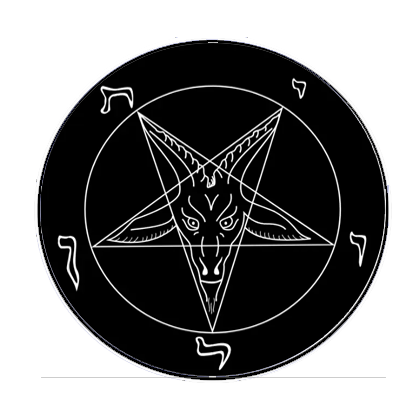
Modern Satanic emblem used as the principal visual focus of the rite. Its black field, inverted pentagram, goat figure and surrounding letters belong to the modern adversarial iconographic tradition rather than to one early grimoire witness.
Timing and Correspondences
- Current: adversarial sovereignty, accusation, rebellion, illumination and disciplined will
- Timing: Saturday night for severity and endurance, Tuesday night for force and confrontation, or a personally significant night of renunciation
- Direction: south for fire and will, or north for sovereignty and depth
- Colors: black, red, white and iron grey
- Incense: frankincense, dragon's blood substitute incense, cedar or no smoke where ventilation is inadequate
- Offering: a written renunciation, completion of a difficult responsibility, a private act of courage, or the destruction of a false promise after it has been examined carefully
Avoid combining every Satanic symbol, divine name and demonic catalogue in one chamber. The rite requires one current, one emblem and one declaration.
Location and Environmental Preparation
Use a private room in which you can stand and speak without interruption. Clean it thoroughly. Cover or remove symbols that belong to other devotional systems unless their deliberate confrontation is the purpose of the rite. The chamber should not imitate a horror set. Order strengthens adversarial authority more effectively than clutter.
Place the emblem at eye level or flat upon a dark cloth. One candle stands before it, not behind it, so the white lines remain visible. The declaration of refusal is placed beneath the emblem. The declaration of responsibility remains in the practitioner's hand until Step 8.
A mirror may be placed to one side, angled so it does not reflect the flame directly. It is used only for brief self-confrontation, not prolonged staring. Remove it if it increases distress or visual confusion.
Tools, Materials and Offerings
- The supplied Satanic emblem, printed or displayed without alteration
- One black, red or white candle in a stable holder
- A dark cloth for the working surface
- The written refusal and written statement of responsibility
- A notebook and pen
- A small bowl of water and a pinch of salt for closure
- Optional light incense with ventilation
- One lawful offering that represents completed responsibility rather than self-harm or destruction
No blood, cutting, dangerous fire, intoxication or coercive sexual act belongs in this rite. Pain does not prove sincerity. The operation is built upon lucid will.
The Rite: Full Ceremonial Sequence
Step 1: Name the Adversary Within the Situation
Write the authority, belief or pattern being challenged. Do not write only “society,” “religion” or “everyone.” Name the actual command that still operates inside you. Then write why it is false, incomplete or no longer accepted.
Read the statement and ask whether rejecting it will place an innocent person at risk. If so, rewrite the purpose. Sovereignty is bounded by responsibility for foreseeable harm.
Step 2: Prepare the Body and Mind
Wash, dress in clean dark clothing and eat normally. Stand with both feet firmly placed. Breathe slowly until the body is alert without strain. Do not fast, exhaust yourself or use substances to intensify the experience.
Say: I enter by my own will. I remain responsible for my own will. No fear, image or voice may command me beyond the boundary I declare.
Step 3: Construct the Chamber
Spread the dark cloth. Place the emblem at the center, candle before it, water and salt to the left, notebook to the right. Put the refusal beneath the emblem. Hold the responsibility statement separately.
Dim the room enough for the seal to dominate the visual field while keeping the floor and flame clearly visible. Safety remains part of sovereignty.
Step 4: Establish the Adversarial Boundary
Face south or north according to the chosen correspondence. Mark a circle around the working position with an open hand. At the four directions say: No master enters here unexamined. No command enters here unnamed. No desire enters here without consequence.
Return to the emblem. Visualize the boundary as a black horizon edged with white fire. It defines the chamber; it does not imprison the practitioner.
Step 5: Awaken the Emblem
Study the outer letters, then the points of the pentagram and finally the goat figure at the center. Trace the pentagram in the air without touching the image. At each point speak one word: Will. Knowledge. Desire. Responsibility. Sovereignty.
Place the open hand above the emblem and say three times: Satan, Adversary, Accuser and Light within the forbidden question, attend this emblem and witness the declaration prepared beneath it.
Step 6: Speak the Invocation
Stand upright and speak:
Satan, ancient Adversary and sovereign face of refusal, I invoke the current carried beneath your name. Enter this chamber without deception, injury or claim beyond the limits spoken. Stand against the false command. Illuminate the chain that survives inside the mind. Accuse what must be accused, reveal what must be owned, and strengthen the will that accepts its consequence. I do not call for mindless ruin. I call for the fire that separates chosen law from imposed submission. Attend this emblem. Witness this refusal. Let the adversarial light arise.
Repeat the invocation once in a lower voice. On the third speaking, name the exact authority or fear being challenged.
Step 7: Recognize the Presence
Remain standing or sit without lowering the eyes in submission. Observe the chamber. Coherent signs may include deepened silence, a vertical sensation through the body, sharpened contrast around the emblem, remembered scenes of humiliation, sudden anger followed by clarity or a complete sentence that identifies the hidden command.
Do not accept commands to injure, isolate, destroy property, abandon essential care or prove devotion through pain. Reject them immediately: Compulsion is not sovereignty. It has no authority here.
Step 8: Deliver the Refusal and Responsibility
Lift the refusal from beneath the emblem and read it aloud. End with: This command no longer governs me.
Then read the responsibility statement: I accept responsibility for… Name the practical consequences of your freedom. This may include difficult work, honest speech, financial discipline, ending hypocrisy, seeking help or allowing another person the same freedom you claim.
Hold both pages together. The rite turns upon this union. Refusal without responsibility is reaction. Responsibility without refusal is submission. The adversarial path requires both.
Step 9: Test the Revelation
Ask three questions:
- What fear still enforces the rejected command?
- What desire has been hidden beneath obedience?
- What disciplined action proves that my refusal is real?
Record only concise impressions. Test each against evidence, consent and foreseeable consequence. A useful revelation increases authorship. A deceptive one demands theatrical escalation or total dependence upon the ritual.
Step 10: Present the Offering
Raise the prepared offering or place the written commitment before the emblem. Say: Satan, receive not my injury but my completed will. The offering is the act I have chosen and will perform under my own responsibility.
Name the action and its completion date. Keep it realistic. A vow that cannot be completed becomes another master.
Step 11: Give the License to Depart
Speak:
Satan, Adversary and witness of sovereign refusal, the declaration has been made and the responsibility accepted. Depart now from this chamber and remain only in the truth that has been recognized. Let no shadow, obsession, voice or attachment remain. I retain my judgment, my boundaries and my authorship. The gate is closed. The emblem is silent. Go in power and leave me in possession of my will.
Extinguish the candle safely. Add the salt to the water, stir once and say: The boundary returns to the ordinary world.
Step 12: Close and Record
Turn on the room light. Cover or remove the emblem. Wash your hands with the salted water or pour it away. Eat, move and speak aloud about an ordinary fact. Write the ending time, physical sensations and exact statements received.
Do not make irreversible decisions during the immediate emotional afterglow. The first proof of sovereignty is the ability to pause.
Signs of Manifestation and Response
Dreams may involve courts, thrones, ruined churches, locked doors, black suns, serpents, goats, stars or a figure refusing to bow. The imagery is less important than the action demanded. A coherent dream reveals where obedience persists or where rebellion has become another disguise.
In waking life, the response may appear as a boundary spoken without apology, a task completed without seeking permission, or the realization that a formerly hated authority was partly internal. The Satanic current often works by making contradiction unbearable.
Dangers, Distortions and Failed Closure
The principal danger is inflation: interpreting one ritual as proof of superiority, invulnerability or exemption from ordinary consequence. Another is compulsive opposition, in which every request, relationship and responsibility is treated as oppression. This is not sovereignty. It is dependence upon conflict.
Religious trauma, shame or fear may intensify. If the rite causes persistent panic, sleeplessness, dissociation or the belief that ordinary people are supernatural enemies, stop all further work, remove the emblem and seek grounded personal support.
Failed closure is indicated by repeated involuntary invocations, fear of covering the image, escalating vows or the belief that suffering must be offered to maintain contact. Reject these patterns completely. The rite explicitly grants no authority to self-harm or compulsion.
Completion and Aftermath
Review the record after one full day. Separate symbol, emotion, interpretation and action. Complete the promised responsibility within the stated period. Destroy or archive the written refusal according to its meaning: destroy it if the command has been decisively renounced; archive it if it records an ongoing boundary that must be remembered.
The rite is complete when the practitioner no longer needs the chamber to perform the chosen act. Satanic sovereignty is not measured by how long the presence is maintained. It is measured by the clarity with which the practitioner leaves the chamber, bears consequence and refuses to surrender authorship again.