On 27 October 1869, the ancient Burnkirch chapel outside Illfurth filled with clergy and witnesses while the younger of two afflicted brothers was brought before the altar. For years, Joseph and Théobald Burner had been reported twisting into impossible postures, speaking in changed voices, reacting violently to sacred objects and revealing knowledge they should not possess. Doctors had examined them. Police and civil authorities had heard of them. The bishop of Strasbourg had authorized a formal inquiry and, eventually, the rite that many villagers believed would decide whether illness or an invading power ruled the boys. When the final prayers were pronounced in the chapel, the case had already become one of the most closely watched possession narratives of nineteenth-century Alsace.
The World Around the Case
This case unfolded within Illfurth under the Second French Empire, a Catholic Alsatian village where medicine, parish authority and older demonological expectations met in the bodies of two working-class children. Its principal foundation is parish reports, episcopal inquiry material, municipal history, later church publications and the enduring local memorial tradition. Those materials do not create perfect certainty, but they make possible a detailed reconstruction of when the reports began, who witnessed them and how interpretation changed as the disturbance entered public knowledge. SatanWorld follows the testimony closely, attributes extraordinary claims to the people and records that preserved them, and keeps the supernatural presence at the centre of the narrative without replacing history with invented scenes.
At the heart of the story is two brothers whose symptoms appeared coordinated, hostile to sacred presence and capable of producing knowledge or strength witnesses considered beyond childhood. The case later became a possession narrative still marked in the landscape by Burnkirch chapel and a memorial column proclaiming divine deliverance. That legacy can obscure the people who endured the original events, so the account returns repeatedly to chronology, room, witness and consequence. The goal is not to produce a courtroom verdict on the unseen. It is to restore the full oppressive shape of an event that contemporaries believed had crossed the boundary between the ordinary world and something acting from beyond it.
The Burner Family
The brothers were born into the family of Martin Burner, a poor itinerant merchant or labourer, and his wife. Sources vary slightly in spelling and exact dates, reflecting French, German and Alsatian transmission, but identify the older boy as Théobald or Thibault and the younger as Joseph. Their household did not possess the resources to isolate the crisis from public attention. When both children became ill in late 1864, neighbours, clergy and employers quickly entered the story. Poverty made the family visible to institutions while limiting its control over the boys’ treatment.
This phase also explains why the case endured as a possession narrative still marked in the landscape by Burnkirch chapel and a memorial column proclaiming divine deliverance. Later summaries often isolate the most spectacular incident, but the original force lay in accumulation: repeated nights, changing witnesses, failed searches and the intrusion of the phenomenon into worship, work or family routine. No single detail must carry the entire story. The authority of the narrative rests upon a sequence in which ordinary explanations were tried, doubted and tried again.
The First Illness
The beginning was described as physical weakness, strange appetite and recurrent attacks. By 1865 the symptoms had become spectacular: bodies stiffened or twisted, the boys rolled and struck against furniture, and periods of apparent exhaustion alternated with sudden force. Their behaviour did not remain within the expectations of fever or epilepsy as understood by those around them. Because two brothers displayed related signs, the household interpreted the affliction as an external power moving between them rather than an isolated disease.
Testimony must be read as human evidence rather than as a transparent window. Fear sharpens some perceptions and distorts others; memory selects; institutions preserve the statements that fit their procedures. Yet these limits do not reduce the event to nothing. They reveal how two brothers whose symptoms appeared coordinated, hostile to sacred presence and capable of producing knowledge or strength witnesses considered beyond childhood was experienced by people whose decisions had real consequences. The case remains frightening because uncertainty did not suspend action. Families, clergy, doctors, technicians or courts still had to decide what to do next.
Voices and Hidden Knowledge
Witness narratives attribute altered voices, obscene or hostile language and statements about distant events or concealed objects to the boys. They were said to speak or understand words beyond their education and to identify blessed objects when these were hidden. Such claims occupied a central place in Catholic discernment of possession, where knowledge of the occult and aversion to sacred things were treated as stronger signs than convulsion alone. The boys’ speech turned the examination room into an interrogation of whatever might be speaking through them.
The physical setting matters here. Rooms, roads, chapels, offices and courtrooms organize what witnesses can hear and whom they can observe. In this case, architecture became part of the phenomenon: it concealed sources, directed attention and gave the disturbance a route through which it could seem to approach or withdraw. The resulting atmosphere was not decorative gothic invention. It arose from the practical problem of trying to locate an event that repeatedly escaped the person searching for it.
The Sacred Provokes the Attack
Priests reportedly tested holy water, relics and prayers without always announcing what they were using. The brothers’ reactions were described as immediate and violent, especially before consecrated objects. They mocked clergy and resisted entry into church. Supporters of possession interpreted concealed tests as decisive because expectation could not explain a reaction to something unseen. Each test, however, also increased the tension around the boys, who lived in a world where every gesture might be read as a sign of spiritual allegiance.
The occult interpretation gained strength because the incident appeared intentional. Random disorder becomes haunting when it answers, follows, selects or arrives at meaningful moments. Witnesses did not merely report abnormal movement; they reported behaviour. Whether that behaviour originated in an entity, a human action, unconscious process or collective expectation remains the deepest question. What the record establishes is that those present felt addressed by the disturbance rather than merely exposed to it.
Doctors, Gendarmes and Curious Crowds
Medical observers examined the children and civil authorities attempted to understand the growing disturbance. Reports of abnormal strength, prolonged postures and resistance to restraint attracted visitors. The family’s home risked becoming a place of pilgrimage and spectacle. Officials worried about disorder, while clergy worried about unauthorized publicity before the Church had judged the case. The boys were moved or separated at different stages, but the story continued to spread through Alsace.
The surviving record gives this stage particular weight because it appears inside parish reports, episcopal inquiry material, municipal history, later church publications and the enduring local memorial tradition. Details were written by people who did not share one theory, yet they converged upon the sense that two brothers whose symptoms appeared coordinated, hostile to sacred presence and capable of producing knowledge or strength witnesses considered beyond childhood. The article preserves that convergence without pretending that a witness could see every room, motive or mechanism. The darkness comes from the limits of inspection: those present could describe what the event did, while its identity remained beyond the ordinary categories available to them.
The Episcopal Commission
The bishop of Strasbourg proceeded cautiously. Formal recognition of possession carried theological and political consequences, and the Church required sustained observation. Clergy gathered testimony, reviewed the medical findings and watched the boys under controlled conditions. The inquiry did not remove mystery; it organized it. The question became whether the pattern of signs met the threshold for solemn exorcism. By 1869, ecclesiastical authority decided that the rites could proceed.
Within Illfurth under the Second French Empire, a Catholic Alsatian village where medicine, parish authority and older demonological expectations met in the bodies of two working-class children, the events described under “The Episcopal Commission” carried meanings larger than a private disturbance. A noise, voice or bodily reaction could indicate sin, intrusion, restless death, public danger or a failure of institutional protection. That cultural field did not make the witnesses foolish; it supplied the language through which an otherwise shapeless terror became narratable. The same language could also place immense pressure upon the afflicted person, whose every movement was watched for confirmation.
The First Brother Is Released
The older brother underwent exorcism away from the village in a religious institution near Strasbourg. Accounts describe a prolonged confrontation in which commands, prayers and the invocation of sacred authority were met with resistance before the symptoms broke. Théobald’s improvement was interpreted as deliverance. The sequence increased expectation that Joseph’s case would end in the same way, but the younger brother remained the focus of public anxiety and was eventually brought to Burnkirch.
This phase also explains why the case endured as a possession narrative still marked in the landscape by Burnkirch chapel and a memorial column proclaiming divine deliverance. Later summaries often isolate the most spectacular incident, but the original force lay in accumulation: repeated nights, changing witnesses, failed searches and the intrusion of the phenomenon into worship, work or family routine. No single detail must carry the entire story. The authority of the narrative rests upon a sequence in which ordinary explanations were tried, doubted and tried again.
The Burnkirch Rite
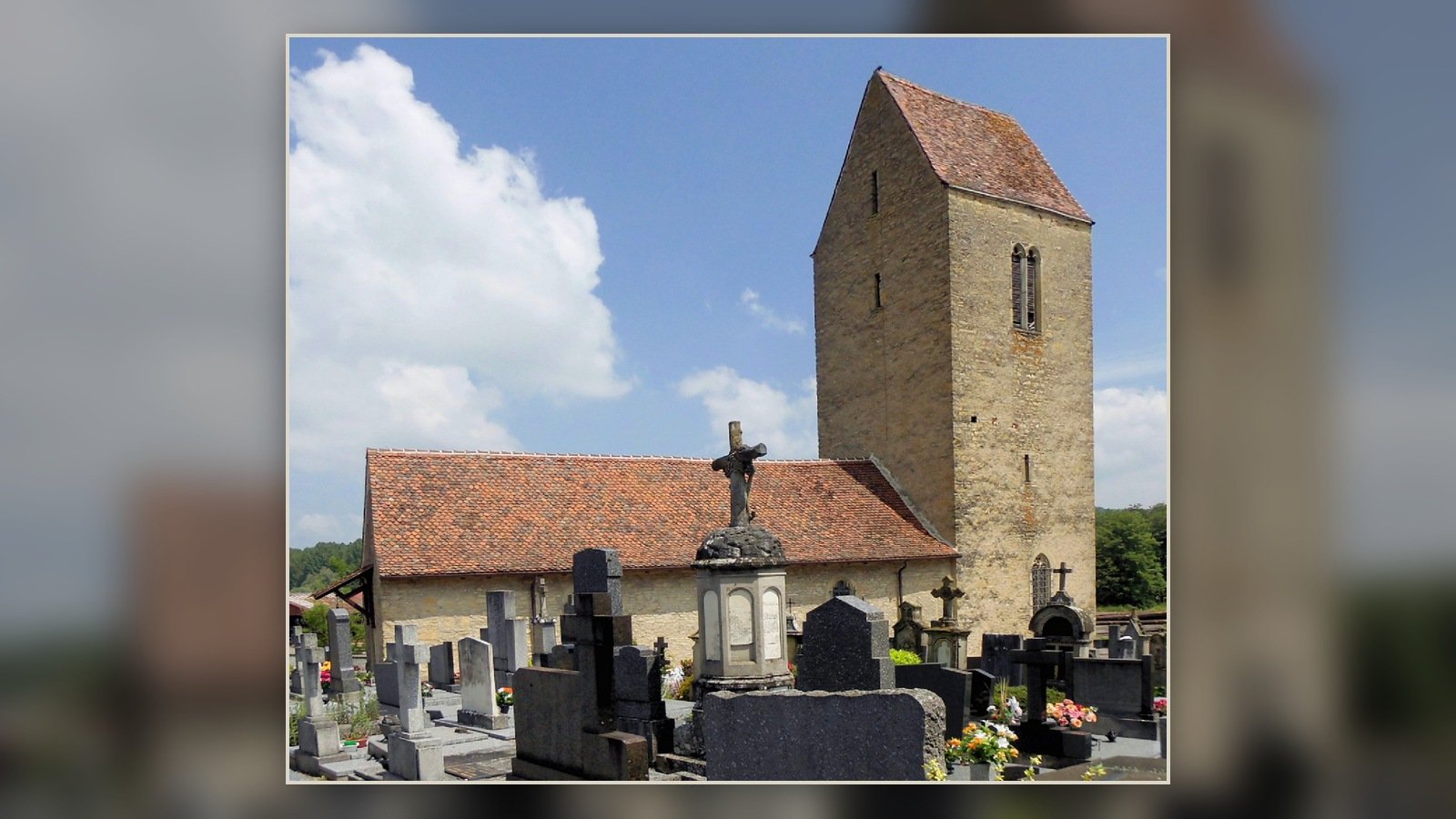
Burnkirch, an old chapel connected with Illfurth’s earliest Christian landscape, gave the final rite a powerful setting. Joseph was taken before the altar under episcopal authorization. The exorcist addressed the possessing force and commanded departure in the name of Christ. Later narratives describe convulsion, cries and a decisive release, followed by bells and thanksgiving. The chapel became part of the evidence—not merely the place where the rite occurred, but a sacred threshold in which the village believed an occupying power had been broken.
Testimony must be read as human evidence rather than as a transparent window. Fear sharpens some perceptions and distorts others; memory selects; institutions preserve the statements that fit their procedures. Yet these limits do not reduce the event to nothing. They reveal how two brothers whose symptoms appeared coordinated, hostile to sacred presence and capable of producing knowledge or strength witnesses considered beyond childhood was experienced by people whose decisions had real consequences. The case remains frightening because uncertainty did not suspend action. Families, clergy, doctors, technicians or courts still had to decide what to do next.
The Boys After Illfurth
Both brothers reportedly lived more ordinary lives after the exorcisms, though their health and later circumstances differed. The community erected a memorial in 1872, binding the case permanently to local space. Illfurth continued to remember the events through parish history, anniversary services and debate. The brothers themselves receded behind the title given to them: the possessed children of Illfurth. Their recovery became the proof by which the earlier terror was interpreted.
The physical setting matters here. Rooms, roads, chapels, offices and courtrooms organize what witnesses can hear and whom they can observe. In this case, architecture became part of the phenomenon: it concealed sources, directed attention and gave the disturbance a route through which it could seem to approach or withdraw. The resulting atmosphere was not decorative gothic invention. It arose from the practical problem of trying to locate an event that repeatedly escaped the person searching for it.
A further layer concerns the passage from private ordeal to public case. Once strangers arrived, the people involved were no longer only witnesses; they became objects of examination. Their words could be repeated without their control, and every inconsistency acquired importance. Publicity enlarged the archive while changing the conditions under which new events occurred.
The event also carried an ethical burden. Belief in an invading presence could produce vigilance, solidarity and sustained care, but it could also expose vulnerable people to restraint, interrogation and spectacle. A serious occult history must preserve both realities. The witnesses’ supernatural interpretation belongs to the case, and so do the consequences of acting upon it.
Later culture often compresses the subject into a single image or phrase. Returning to the longer record restores duration: waiting, interrupted sleep, repeated consultation and the slow erosion of confidence in familiar surroundings. The most frightening cases are rarely one impossible moment. They are the days during which no one knows whether the moment will return.
A further layer concerns the passage from private ordeal to public case. Once strangers arrived, the people involved were no longer only witnesses; they became objects of examination. Their words could be repeated without their control, and every inconsistency acquired importance. Publicity enlarged the archive while changing the conditions under which new events occurred.
The event also carried an ethical burden. Belief in an invading presence could produce vigilance, solidarity and sustained care, but it could also expose vulnerable people to restraint, interrogation and spectacle. A serious occult history must preserve both realities. The witnesses’ supernatural interpretation belongs to the case, and so do the consequences of acting upon it.
Later culture often compresses the subject into a single image or phrase. Returning to the longer record restores duration: waiting, interrupted sleep, repeated consultation and the slow erosion of confidence in familiar surroundings. The most frightening cases are rarely one impossible moment. They are the days during which no one knows whether the moment will return.
A further layer concerns the passage from private ordeal to public case. Once strangers arrived, the people involved were no longer only witnesses; they became objects of examination. Their words could be repeated without their control, and every inconsistency acquired importance. Publicity enlarged the archive while changing the conditions under which new events occurred.
What Remains
The shared affliction of two brothers gave Illfurth unusual force. It suggested transmission or common assault and made it harder for witnesses to explain the events as one child’s private performance.
The case shows how nineteenth-century possession required negotiation among medicine, civil order and episcopal authority. None of these institutions could ignore the others.
Burnkirch remains central because landscapes preserve belief. A chapel and memorial can keep a supernatural verdict visible long after the bodies and witnesses have disappeared.
What remains is a possession narrative still marked in the landscape by Burnkirch chapel and a memorial column proclaiming divine deliverance. The names and places survive because the event entered documents before it became entertainment. Those documents preserve voices that are sincere, frightened, partisan, careful and sometimes contradictory. They do not eliminate the darkness. They give it historical weight. The case continues to disturb because two brothers whose symptoms appeared coordinated, hostile to sacred presence and capable of producing knowledge or strength witnesses considered beyond childhood, and because the actions taken in response changed lives long after the last reported manifestation.
The final boundary must therefore remain open. A historical archive can show what witnesses heard, what bodies endured, what instruments registered and what courts or churches decided. It cannot command the unseen to identify itself for a later reader. These stories persist in the interval between record and presence—the place where testimony becomes memory, memory becomes legend, and the legend still carries the pressure of something that once entered an ordinary room and refused to behave like anything known.