

Near midnight on Christmas Eve 1843, after months of convulsions, prayers and voices that seemed to multiply through a small Swabian household, a cry broke from Gottliebin Dittus with such force that people outside were said to hear it: “Jesus is Victor.” For pastor Johann Christoph Blumhardt, the words marked the collapse of an invisible resistance he had fought for almost two years. The struggle had begun with knocks in a poor house at Möttlingen, a pale figure seen near the bed and hidden papers associated with folk magic. It expanded into wounds, objects said to emerge from the body, threats of suicide and voices claiming the identities of the dead. The final cry would transform both the afflicted woman and the pastor who refused to leave her.
The World Around the Case
This case unfolded within the pietist landscape of nineteenth-century Württemberg, where biblical faith, folk magic, medicine and belief in the restless dead overlapped in village life. Its principal foundation is Blumhardt’s written account, church-historical biographies, household testimony and the later institutional memory of the Blumhardt movement. Those materials do not create perfect certainty, but they make possible a detailed reconstruction of when the reports began, who witnessed them and how interpretation changed as the disturbance entered public knowledge. SatanWorld follows the testimony closely, attributes extraordinary claims to the people and records that preserved them, and keeps the supernatural presence at the centre of the narrative without replacing history with invented scenes.
At the heart of the story is a prolonged affliction that seemed to pass through rooms and relatives while producing voices, bodily injuries and physical objects reported by attendants. The case later became the foundational event behind Blumhardt’s proclamation “Jesus is Victor,” a phrase that shaped his later healing ministry and theology. That legacy can obscure the people who endured the original events, so the account returns repeatedly to chronology, room, witness and consequence. The goal is not to produce a courtroom verdict on the unseen. It is to restore the full oppressive shape of an event that contemporaries believed had crossed the boundary between the ordinary world and something acting from beyond it.
The Dittus Household
Gottliebin was born in 1815 and lived with siblings in conditions marked by poverty, illness and family loss. The Möttlingen house carried memories of death before the disturbances began. Such households were vulnerable not only materially but spiritually in local imagination: inherited objects, unresolved burial, concealed charms and the moral history of previous occupants could all be suspected when ordinary order failed. Gottliebin’s position as an unmarried working woman placed her at the centre of domestic burdens without giving her social authority over the interpretations placed upon her suffering.
The surviving record gives this stage particular weight because it appears inside Blumhardt’s written account, church-historical biographies, household testimony and the later institutional memory of the Blumhardt movement. Details were written by people who did not share one theory, yet they converged upon the sense that a prolonged affliction that seemed to pass through rooms and relatives while producing voices, bodily injuries and physical objects reported by attendants. The article preserves that convergence without pretending that a witness could see every room, motive or mechanism. The darkness comes from the limits of inspection: those present could describe what the event did, while its identity remained beyond the ordinary categories available to them.
Noises in the House
By 1841 and 1842, occupants and visitors reported knocks, scratching and movement that could not be located securely. The sounds gathered around Gottliebin’s room but were not always confined to her presence. Attempts to inspect the building did not end them. The disturbance belonged to the classic grammar of a haunted household—noise without visible maker, repetition after challenge, and growing fear that the architecture itself had become responsive. The more neighbours knew, the harder it became to preserve the case as a private illness.
Within the pietist landscape of nineteenth-century Württemberg, where biblical faith, folk magic, medicine and belief in the restless dead overlapped in village life, the events described under “Noises in the House” carried meanings larger than a private disturbance. A noise, voice or bodily reaction could indicate sin, intrusion, restless death, public danger or a failure of institutional protection. That cultural field did not make the witnesses foolish; it supplied the language through which an otherwise shapeless terror became narratable. The same language could also place immense pressure upon the afflicted person, whose every movement was watched for confirmation.
The Pale Woman by the Bed
Accounts connected the crisis with an apparition described as a translucent or dead-looking woman. Gottliebin believed the figure sought something or carried a demand. Hidden papers and objects associated with magical practice were reportedly found in or around the house, reinforcing suspicion that earlier acts had left a spiritual claim upon the place. The apparition gave the disturbance a history. The sounds were no longer random; they seemed to belong to a dead identity attempting to enter the present through the most vulnerable living body.
This phase also explains why the case endured as the foundational event behind Blumhardt’s proclamation “Jesus is Victor,” a phrase that shaped his later healing ministry and theology. Later summaries often isolate the most spectacular incident, but the original force lay in accumulation: repeated nights, changing witnesses, failed searches and the intrusion of the phenomenon into worship, work or family routine. No single detail must carry the entire story. The authority of the narrative rests upon a sequence in which ordinary explanations were tried, doubted and tried again.
Blumhardt Enters the Conflict
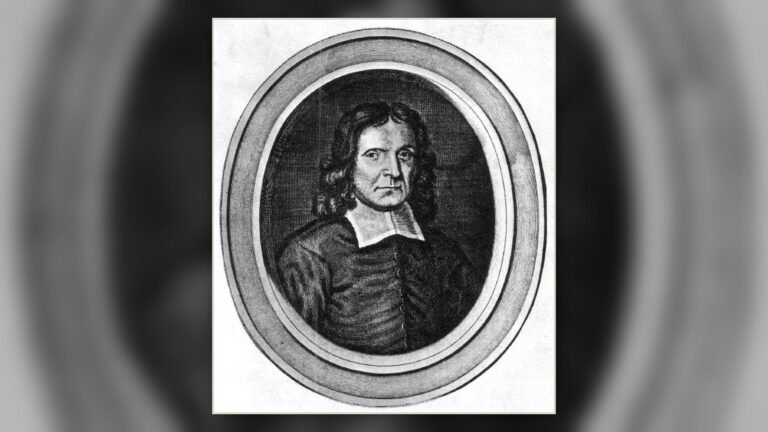
Pastor Johann Christoph Blumhardt was initially reluctant to interpret every symptom as possession. He prayed, questioned and sought practical order while the case escalated. In April 1842 he became deeply involved, visiting the house and confronting the voices in explicitly Christian terms. His method was not a formal Roman exorcism but sustained pastoral command, confession and prayer. He refused fascination with the spirits’ stories and insisted that the struggle end under the authority of Christ. That refusal to negotiate became the centre of his narrative.
Testimony must be read as human evidence rather than as a transparent window. Fear sharpens some perceptions and distorts others; memory selects; institutions preserve the statements that fit their procedures. Yet these limits do not reduce the event to nothing. They reveal how a prolonged affliction that seemed to pass through rooms and relatives while producing voices, bodily injuries and physical objects reported by attendants was experienced by people whose decisions had real consequences. The case remains frightening because uncertainty did not suspend action. Families, clergy, doctors, technicians or courts still had to decide what to do next.
Convulsions and Speaking Presences
Gottliebin experienced violent bodily attacks, altered speech and periods in which voices claimed to speak through her. Some identified themselves as dead people seeking release; others appeared hostile and deceptive. Blumhardt recorded names and statements while warning that the entities could imitate, multiply and lie. The room could shift rapidly from exhausted silence to shouting, prayer and physical restraint. Witnesses understood the body as occupied territory, but the alleged occupants did not form a stable hierarchy. They arrived as a crowd.
The physical setting matters here. Rooms, roads, chapels, offices and courtrooms organize what witnesses can hear and whom they can observe. In this case, architecture became part of the phenomenon: it concealed sources, directed attention and gave the disturbance a route through which it could seem to approach or withdraw. The resulting atmosphere was not decorative gothic invention. It arose from the practical problem of trying to locate an event that repeatedly escaped the person searching for it.
Wounds, Needles and Impossible Objects
The most disturbing reports concern physical injury. Gottliebin bled, suffered burns and was said to expel or reveal needles, pieces of glass, iron and other objects. Such phenomena appear in older possession traditions, where intrusive matter becomes visible evidence of spiritual assault. Attendants handled the objects as tangible remains of an invisible conflict. The record cannot recreate every condition under which they appeared, but within the household they intensified certainty that ordinary sickness was insufficient. The body seemed to manufacture the weapons used against it.
The occult interpretation gained strength because the incident appeared intentional. Random disorder becomes haunting when it answers, follows, selects or arrives at meaningful moments. Witnesses did not merely report abnormal movement; they reported behaviour. Whether that behaviour originated in an entity, a human action, unconscious process or collective expectation remains the deepest question. What the record establishes is that those present felt addressed by the disturbance rather than merely exposed to it.
The Conflict Spreads
As the struggle continued, symptoms reportedly affected siblings and other members of the household. Threats of self-destruction and sudden impulses required constant watching. For Blumhardt, this spread confirmed that the problem exceeded one person’s private imagination. For the family, it removed the possibility of retreat: the same rooms, relationships and nights had to be endured while the pastor pursued an end that did not come quickly. The duration is essential. The case was not one spectacular ceremony but a long attrition of sleep, fear and repetition.
The surviving record gives this stage particular weight because it appears inside Blumhardt’s written account, church-historical biographies, household testimony and the later institutional memory of the Blumhardt movement. Details were written by people who did not share one theory, yet they converged upon the sense that a prolonged affliction that seemed to pass through rooms and relatives while producing voices, bodily injuries and physical objects reported by attendants. The article preserves that convergence without pretending that a witness could see every room, motive or mechanism. The darkness comes from the limits of inspection: those present could describe what the event did, while its identity remained beyond the ordinary categories available to them.
Christmas Eve 1843
The final crisis centred on Gottliebin’s sister Katharina and a voice described as the last and strongest enemy. The confrontation continued through hours of prayer and command. Near midnight the resisting presence yielded in the cry “Jesus ist Sieger”—“Jesus is Victor.” Blumhardt interpreted the words as the enemy’s forced confession rather than a slogan invented after the event. The atmosphere changed. The attacks did not simply stop like a machine switched off, but the decisive siege was understood to have ended.
Within the pietist landscape of nineteenth-century Württemberg, where biblical faith, folk magic, medicine and belief in the restless dead overlapped in village life, the events described under “Christmas Eve 1843” carried meanings larger than a private disturbance. A noise, voice or bodily reaction could indicate sin, intrusion, restless death, public danger or a failure of institutional protection. That cultural field did not make the witnesses foolish; it supplied the language through which an otherwise shapeless terror became narratable. The same language could also place immense pressure upon the afflicted person, whose every movement was watched for confirmation.
After the Victory
Gottliebin later lived within the Blumhardt household and moved with the family to Bad Boll, where she worked and remained part of the community until her death in 1872. Blumhardt’s ministry changed profoundly. People came to Möttlingen seeking confession, healing and renewal, and the pastor became associated with a theology in which Christ’s victory extended into bodily and social life. Gottliebin’s suffering thus became the origin story of a movement. Her own later quietness stands in contrast to the immense religious meaning built around her crisis.
This phase also explains why the case endured as the foundational event behind Blumhardt’s proclamation “Jesus is Victor,” a phrase that shaped his later healing ministry and theology. Later summaries often isolate the most spectacular incident, but the original force lay in accumulation: repeated nights, changing witnesses, failed searches and the intrusion of the phenomenon into worship, work or family routine. No single detail must carry the entire story. The authority of the narrative rests upon a sequence in which ordinary explanations were tried, doubted and tried again.
A further layer concerns the passage from private ordeal to public case. Once strangers arrived, the people involved were no longer only witnesses; they became objects of examination. Their words could be repeated without their control, and every inconsistency acquired importance. Publicity enlarged the archive while changing the conditions under which new events occurred.
The event also carried an ethical burden. Belief in an invading presence could produce vigilance, solidarity and sustained care, but it could also expose vulnerable people to restraint, interrogation and spectacle. A serious occult history must preserve both realities. The witnesses’ supernatural interpretation belongs to the case, and so do the consequences of acting upon it.
Later culture often compresses the subject into a single image or phrase. Returning to the longer record restores duration: waiting, interrupted sleep, repeated consultation and the slow erosion of confidence in familiar surroundings. The most frightening cases are rarely one impossible moment. They are the days during which no one knows whether the moment will return.
A further layer concerns the passage from private ordeal to public case. Once strangers arrived, the people involved were no longer only witnesses; they became objects of examination. Their words could be repeated without their control, and every inconsistency acquired importance. Publicity enlarged the archive while changing the conditions under which new events occurred.
The event also carried an ethical burden. Belief in an invading presence could produce vigilance, solidarity and sustained care, but it could also expose vulnerable people to restraint, interrogation and spectacle. A serious occult history must preserve both realities. The witnesses’ supernatural interpretation belongs to the case, and so do the consequences of acting upon it.
What Remains
The case belongs simultaneously to possession history and to the history of pastoral care. Blumhardt’s account presents spiritual warfare, but it also records the enormous labour of staying with a person through prolonged danger.
The voices claiming to be dead complicate a simple demon narrative. They resemble older traditions of restless souls, yet Blumhardt interpreted the entire crowd through a Protestant struggle against deceptive powers.
“Jesus is Victor” survived because it condensed two years of disorder into four words. The phrase remains powerful precisely because the events preceding it were anything but simple.
What remains is the foundational event behind Blumhardt’s proclamation “Jesus is Victor,” a phrase that shaped his later healing ministry and theology. The names and places survive because the event entered documents before it became entertainment. Those documents preserve voices that are sincere, frightened, partisan, careful and sometimes contradictory. They do not eliminate the darkness. They give it historical weight. The case continues to disturb because a prolonged affliction that seemed to pass through rooms and relatives while producing voices, bodily injuries and physical objects reported by attendants, and because the actions taken in response changed lives long after the last reported manifestation.
The final boundary must therefore remain open. A historical archive can show what witnesses heard, what bodies endured, what instruments registered and what courts or churches decided. It cannot command the unseen to identify itself for a later reader. These stories persist in the interval between record and presence—the place where testimony becomes memory, memory becomes legend, and the legend still carries the pressure of something that once entered an ordinary room and refused to behave like anything known.


.jpg)