On 15 March 1857, in the Alpine parish of Morzine, two girls of about ten years old fell into violent states that prayer did not quiet. Their bodies stiffened, their voices changed, and sacred objects provoked fury. Within months, the affliction had passed from child to child. By 1861, officials counted more than a hundred sufferers. A mountain village had begun to speak as if occupied.
The Valley Before the Outbreak
Morzine lay high in the Chablais mountains, enclosed by steep slopes and long winters. In the 1850s it belonged to the Duchy of Savoy, not yet to France. Families lived through farming, timber, seasonal movement and the close dependencies of an isolated parish. Religion structured the calendar, the school, the household and the meaning of illness.
The inhabitants were repeatedly described by visitors as devout. Priests occupied a central place in communal life, and preparation for First Communion carried intense spiritual weight for children. In such a setting, the Devil was not a literary figure. Temptation, sacrilege and possession belonged to a religious universe made present through sermons, confession and ritual.
The outbreak began shortly before Savoy’s annexation to France in 1860. Over the following years, the village would be claimed by competing authorities: local clergy, physicians, imperial administrators and specialists sent from outside. Each attempted to name what had entered Morzine. The villagers’ own language was often the most direct. They called it possession.
Two Girls in March 1857
The first symptoms were reported in March 1857 among two girls approximately ten years old. Later local histories identify Péronne Tavernier as one of the first, followed by another child within her circle. The girls were preparing within the religious life of the parish when strange attacks began.
During the crises they fell, twisted, shouted and seemed to lose ordinary control. Their voices could become harsh or hostile. Sacred words intensified the disturbance. Those who watched did not see simple fainting. They saw personalities displaced by something that mocked prayer and resisted the priest.
The condition spread. By November, a report placed the number affected at twenty-seven. The sufferers were mainly girls and women, though some men would later be included. Between attacks many returned to work, conversation and ordinary health. That alternation made the episodes more disturbing. The force did not destroy the body continuously; it appeared, seized it, spoke, and withdrew.
The Voices Against the Church
Witness descriptions repeatedly emphasized blasphemous speech. Women known for religious observance insulted clergy and sacred things during the paroxysms. The voices claimed demonic identities or spoke as a collective presence. Some sufferers appeared unable to bear holy water, relics or prayers of exorcism. Others reacted before a sacred object was visibly revealed.
The afflicted were said to possess unusual strength. Several people might be required to restrain one body. Limbs bent, jaws tightened and faces changed under the strain. The attacks could arise in church, in houses, during processions or when officials assembled to observe them. A public ceremony intended to restore order might instead become the scene of a mass crisis.
Contemporary religious observers considered the intervals of normality significant. The women could be calm and industrious until the moment of seizure. Then the voice spoke with contempt for the same beliefs they ordinarily held. To those convinced of possession, this was not inconsistency. It was the clearest sign that another intelligence had entered.
The Parish Divided by an Invisible Enemy
Possession altered relationships inside Morzine. Families watched daughters and wives for the beginning of an attack. Neighbours gathered when cries were heard. Those not affected became witnesses, attendants or targets. A village dependent on cooperation began to fear that the affliction could pass through proximity, imitation, touch or spiritual contamination.
The episodes also created conflict over ritual. Many inhabitants demanded exorcism. They believed spiritual force required spiritual weapons. Officials outside the parish feared that public rites and constant discussion would feed the outbreak. The greater the effort to restrict exorcism, the more abandoned some villagers felt.
Priests faced an impossible position. If they treated the women as possessed, they risked strengthening the conviction that demons ruled the valley. If they refused the expected rites, they appeared to deny the suffering before them. The crisis therefore spread not only across bodies but across authority.
The Investigators Arrive
In September 1857, visitors came to examine the events in person. One declaration later circulated by spiritualist writers states that observers arrived on 30 September and saw both children believed delivered and others still in crisis. They described the sufferers as healthy in ordinary intervals and recorded their conclusion that the phenomena were supernatural.
Medical reports used different language. The local doctor Tavernier documented the early cases. Later, Augustin Constans, inspector-general of asylums, conducted the inquiry that produced the influential 1863 study Relation sur une épidémie d’hystéro-démonopathie. The title itself preserved the collision of worlds: hysteria joined to demonopathy, medicine attempting to contain what the village experienced as possession.
Constans collected symptoms, family histories and observations of the paroxysms. He counted the spread and searched for conditions that allowed it to continue. Yet the administrative report did not erase the demon from local speech. Every official description returned to the same scenes—convulsions, altered voices, hostility toward religion and attacks occurring before witnesses.
One Hundred and Twenty
The number of sufferers continued to rise. A contemporary account stated that the first two cases of March 1857 had become twenty-seven by November and reached a maximum of about one hundred and twenty in 1861. Other later counts, depending on period and definition, placed the total number touched across the long outbreak even higher.
The scale transformed Morzine from a local curiosity into a national problem. After Savoy became part of France, the imperial state inherited the possessed village. Reports travelled to Annecy and Paris. Physicians, administrators and clergy argued over how to end a phenomenon that seemed capable of surviving every change in jurisdiction.
Mass outbreaks often become abstract in statistics. Morzine remained intimate. One hundred and twenty meant houses interrupted by screams, children watched through the night, women carried from church, and neighbours recognizing familiar faces beneath expressions they believed were not their own. The village did not experience a number. It experienced repeated invasion.
Removal from the Mountain
Authorities began removing some sufferers from Morzine and dispersing them to hospitals in other parts of France. The policy rested on the belief that separation from the charged environment would weaken the attacks. Reports noted that some women improved when taken away and relapsed after returning.
To the villagers, removal could appear as exile rather than cure. The possessed were separated from family, parish and the rituals they trusted. The state treated isolation as medicine; the community could interpret the same act as an attempt to silence the supernatural truth of the cases.
The geography became part of the phenomenon. Morzine itself seemed contaminated. The narrow valley, the gatherings, the church and the constant expectation of crisis created a field from which the afflicted had to be physically extracted. When they returned, the old voices sometimes returned with them.
The Bishop’s Visit and the Church in Uproar
One of the most dramatic moments occurred when ecclesiastical authority confronted the outbreak publicly. During a major religious visit, women entered violent crises. Accounts describe insults, physical resistance and disorder around sacred ceremonies. The bishop’s ring was reportedly torn away, and holy oils fell amid the confusion.
The scene inverted every hierarchy of the parish. The bishop arrived as the visible representative of order; the possessed bodies answered with collective defiance. For believers, the violence confirmed that the demons recognized and hated spiritual authority. For administrators, it demonstrated how quickly ceremony could trigger contagion.
The event became part of Morzine’s enduring memory because it placed the conflict at the altar’s edge. The outbreak was not confined to bedrooms or whispered family accounts. It erupted where the whole community could see sacred power challenged.
The Return of 1864
By 1864, reports announced a renewed wave. Women who had been quiet for years fell again into frightening paroxysms. Contemporary spiritualist periodicals described the epidemic as still ravaging the town and neighbouring hamlets. The long duration resisted every simple ending.
This return gave Morzine its most oppressive quality. A haunting may cease when a family leaves a house; a possession may end with one exorcism. At Morzine, the phenomenon belonged to the community. It could recede and then rise through multiple bodies, apparently waiting within the valley.
The state continued to regulate gatherings, religious practices and the movement of sufferers. Priests changed, officials rotated and medical language developed. The afflicted remained the point at which all systems failed to agree.
What the Women Reported
The voices and visions attributed to the possessed varied. Some spoke of demons within them. Some described pressure, internal command or the presence of hostile beings. During attacks they could name persons, curse religious figures or declare that the Devil governed their movements. The words were remembered because they contradicted the women’s ordinary character.
The crises also had a social sound. They occurred among people who knew one another’s histories. A voice could accuse a neighbour, repeat a local grievance or reveal a fear already present in the community. The supernatural did not arrive speaking a foreign language. It used the vocabulary, relationships and religious symbols of Morzine.
That intimacy helps explain why outside classifications never fully replaced possession. A medical diagnosis described a syndrome. The villagers encountered a voice that knew the priest, hated the Host, recognized the family and returned after years of silence.
From Demonomania to Archive
The official papers of Haute-Savoie preserve Morzine within records of public health and administration. Constans’s 1863 report became the best-known medical document. Later scholarship by Catherine-Laurence Maire and other historians reconstructed the outbreak across the years 1857 to 1873.
These archives make Morzine unusually rich for SatanWorld. They record the number of cases, state interventions and medical observations without reducing the villagers’ testimony to a footnote. The word “demonomania” itself shows that the authorities could not describe the illness without invoking the being the villagers feared.
The documents also preserve duration. This was not a weekend panic or one sensational ceremony. It continued across annexation, hospital removals, religious conflict and repeated investigation. Some chronologies extend the final manifestations into the early 1870s.
The Village After the Voices
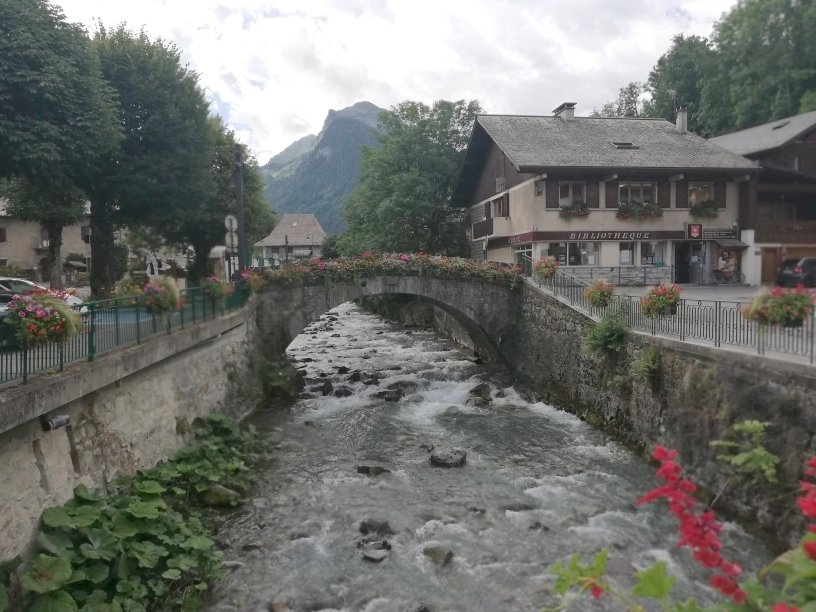
Morzine later became known for mountain tourism and winter sport. Roads, lifts and modern buildings transformed the valley. The landscape that once isolated the parish now receives visitors from across Europe. Yet the possession remains beneath the newer identity.
Local historians have returned to the names of the afflicted and the locations of the first attacks. Exhibitions, books and archival work have restored the human scale of the event. The women were not anonymous examples of hysteria or superstition. They belonged to families whose descendants lived among the same slopes.
The story survives because no single scene contains it. Its true image is cumulative: two girls in March, twenty-seven by November, more than a hundred at the height, and recurrent voices continuing year after year.
The Valley That Answered Back
Every authority that entered Morzine attempted to speak over the phenomenon. The priest named possession. The physician named disease. The administrator named disorder. The women answered in voices that seemed to belong to none of those categories.
The most frightening testimony is not the most theatrical. It is the report that sufferers could be entirely ordinary between attacks. They worked, spoke and prayed—then changed when the crisis came. The intruder appeared selective, temporary and aware of the sacred objects used against it.
By the time the outbreak faded, a generation had lived beneath its expectation. Children had grown into adults while the valley waited for the next body to fall. Morzine remains one of the rare possession histories in which the alleged presence did not choose one victim or one convent. It moved through a village and made the community itself the haunted place.
First Communion and the Fear of the Threshold
The age of the first girls matters. They were near the period of First Communion, when Catholic instruction required careful examination of conscience, confession and preparation to receive the consecrated Host. The child approached a threshold understood as both sacred and dangerous. Sin had to be named; temptation had to be resisted; the presence of Christ in the Eucharist had to be accepted without doubt.
At Morzine, the earliest attacks seemed to turn that preparation inside out. Instead of calm devotion came bodily revolt. Instead of the expected language of faith came insults and hostile voices. To families formed by the same religious teaching, the timing suggested that the enemy had attacked precisely where the sacred commitment was strongest.
As the affliction spread to older girls and women, the original association did not disappear. The possessed were repeatedly drawn into conflict around confession, Mass, holy water and clerical authority. Their crises appeared to inhabit the ritual life of the parish rather than occur randomly beside it.
The Anatomy of a Morzine Crisis
Reports describe a recognizable progression. A woman might first show agitation, altered expression or sudden resistance. The body then entered convulsion. She could throw herself down, arch, strike out, clench her jaw or require several adults to restrain her. Speech became rapid and aggressive. Names, curses and theological phrases emerged amid cries.
Some accounts emphasized an apparent insensitivity to pain during the attacks and a lack of exhaustion afterward. Others recorded that the sufferers understood questions or words in ways observers considered beyond their normal education. Religious tests—prayers spoken quietly, blessed objects concealed among ordinary ones—were used to determine whether the force perceived what the woman could not see.
The return to ordinary consciousness was often abrupt. A sufferer might remember little, resume household work and speak in her familiar voice. That transition created the impression of occupation rather than continuous madness: the body remained, the invader came and went.
Imperial Measures Against the Unseen
After annexation, French officials attempted a coordinated response. Medical inspection, police supervision, hospital transfer and restrictions on public gatherings were all used. Certain priests were removed or reassigned. The authorities tried to stop crowds from forming around attacks and to prevent exorcism from becoming a repeated communal spectacle.
These measures reveal the scale of the perceived threat. A private illness would not have required state strategy. Morzine was treated as an epidemic capable of spreading through attention, expectation and shared ritual. The afflicted were dispersed geographically because the village itself seemed to sustain the phenomenon.
Yet administrative power could not command the voices to cease. Each recurrence made the official explanation appear incomplete to those who lived beside the sufferers. The state could remove bodies from Morzine; it could not remove the belief that something in Morzine called them back.
Sources and Further Reading
- Augustin Constans, Relation sur une épidémie d’hystéro-démonopathie observée à Morzine, 1863.
- Archives départementales de la Haute-Savoie, public-health and administrative records concerning Morzine.
- Catherine-Laurence Maire, Les Possédées de Morzine, 1857–1873.
- Contemporary reports dated 1857–1864 describing clerical observation and recurrence.
- Jean-Christophe Richard, historical investigation of the Morzine possessions.