The Picatrix does not begin with a list of demons waiting in darkness. It begins with a universe already alive. Stars, planets, stones, animals, perfumes, images and human intention are joined through hidden correspondences. The magician’s task is not to invent power, but to construct the exact vessel through which celestial power can descend.
Ghāyat al-Ḥakīm
The work known in Latin as Picatrix derives from an Arabic text titled Ghāyat al-Ḥakīm, the Goal of the Wise. It was compiled in al-Andalus, probably in the eleventh century, from earlier philosophical, astrological and magical materials. The Arabic work draws upon Hellenistic, Islamic, Hermetic, Sabian and Indian traditions. Its authorship was later attributed to Maslama al-Majriti but remains disputed. The result is a body of evidence that must be read through manuscripts, catalogues and the material history of the object rather than through later legend alone.
The surviving record places this material within a precise historical world. The title Picatrix arose in translation.. Every copied name, altered diagram, ownership mark or change of sequence records a decision made by a reader who believed the text deserved preservation. Those decisions are often as revealing as the stated operation itself.
The text is therefore an archive of transmission. Its pages preserve ideas that crossed languages, religions and empires before reaching Latin readers. In the culture that produced it, sacred language, natural philosophy, astrology, law and ritual were not always separated by the boundaries used today. The manuscript therefore speaks from a world in which knowledge could be devotional, technical and forbidden at the same time.
Read closely, this section also explains why the subject continued to generate fear. Its authority does not depend upon a modern claim that every operation worked exactly as promised. It rests on the historical fact that scribes, collectors, judges or practitioners treated the words as consequential—important enough to copy, hide, condemn, transport or preserve across generations.
The Court of Alfonso X
In the mid-thirteenth century, the Arabic text was translated into Castilian under the patronage of Alfonso X of Castile. A Latin translation followed and became the principal vehicle of its European influence. Alfonso’s court sponsored astronomical tables, translations and learned compilations. Translators worked across Arabic, Hebrew, Castilian and Latin. The result is a body of evidence that must be read through manuscripts, catalogues and the material history of the object rather than through later legend alone.
The manuscript becomes clearer when its physical details are read beside its claims. The Picatrix entered a royal environment where celestial knowledge had practical prestige.. Every copied name, altered diagram, ownership mark or change of sequence records a decision made by a reader who believed the text deserved preservation. Those decisions are often as revealing as the stated operation itself.
The translation did not simply move words. It relocated a cosmology into Christian Europe, where its rituals could be admired, copied and feared. In the culture that produced it, sacred language, natural philosophy, astrology, law and ritual were not always separated by the boundaries used today. The manuscript therefore speaks from a world in which knowledge could be devotional, technical and forbidden at the same time.
Read closely, this section also explains why the subject continued to generate fear. Its authority does not depend upon a modern claim that every operation worked exactly as promised. It rests on the historical fact that scribes, collectors, judges or practitioners treated the words as consequential—important enough to copy, hide, condemn, transport or preserve across generations.
Four Books of Celestial Construction
The Latin Picatrix is arranged in four books that move from philosophical foundations to images, planetary operations, spirits and compounded rituals. The work explains the nature of magic and celestial causation. It describes images made for particular effects. The result is a body of evidence that must be read through manuscripts, catalogues and the material history of the object rather than through later legend alone.
What appears at first to be a single mystery is actually a chain of copying, use and reinterpretation. It catalogues planetary qualities, suffumigations and prayers.. Every copied name, altered diagram, ownership mark or change of sequence records a decision made by a reader who believed the text deserved preservation. Those decisions are often as revealing as the stated operation itself.
Its scale is architectural. Each operation rests upon a larger theory of how the cosmos communicates with matter. In the culture that produced it, sacred language, natural philosophy, astrology, law and ritual were not always separated by the boundaries used today. The manuscript therefore speaks from a world in which knowledge could be devotional, technical and forbidden at the same time.
Read closely, this section also explains why the subject continued to generate fear. Its authority does not depend upon a modern claim that every operation worked exactly as promised. It rests on the historical fact that scribes, collectors, judges or practitioners treated the words as consequential—important enough to copy, hide, condemn, transport or preserve across generations.
The World as a Chain of Correspondence
Astral magic depends upon the belief that celestial bodies pour qualities into the lower world. Materials can receive and concentrate those qualities when selected according to sympathy. Colours, metals, animals, plants and perfumes correspond to planets. Timing aligns the operation with celestial strength. The result is a body of evidence that must be read through manuscripts, catalogues and the material history of the object rather than through later legend alone.
The archive preserves both the ambition of the text and the limitations of what can now be known. The prepared image becomes a meeting point between heaven and matter.. Every copied name, altered diagram, ownership mark or change of sequence records a decision made by a reader who believed the text deserved preservation. Those decisions are often as revealing as the stated operation itself.
The magician is an engineer of likeness. By assembling things that belong to one planetary nature, the rite creates a body capable of receiving that planet’s influence. In the culture that produced it, sacred language, natural philosophy, astrology, law and ritual were not always separated by the boundaries used today. The manuscript therefore speaks from a world in which knowledge could be devotional, technical and forbidden at the same time.
Read closely, this section also explains why the subject continued to generate fear. Its authority does not depend upon a modern claim that every operation worked exactly as promised. It rests on the historical fact that scribes, collectors, judges or practitioners treated the words as consequential—important enough to copy, hide, condemn, transport or preserve across generations.
Talismans and Images
The Picatrix gives detailed instructions for images designed to produce love, hatred, protection, ruin, favour, knowledge or transformation. The image is made under a chosen celestial configuration. Figures may be engraved on metal, stone or other materials. Inscriptions and names bind purpose to form. The result is a body of evidence that must be read through manuscripts, catalogues and the material history of the object rather than through later legend alone.
The surviving record places this material within a precise historical world. Astrological elections determine the moment of manufacture.. Every copied name, altered diagram, ownership mark or change of sequence records a decision made by a reader who believed the text deserved preservation. Those decisions are often as revealing as the stated operation itself.
A talisman is not merely a symbol of the planet. It is presented as a constructed channel, a material object timed to the sky. In the culture that produced it, sacred language, natural philosophy, astrology, law and ritual were not always separated by the boundaries used today. The manuscript therefore speaks from a world in which knowledge could be devotional, technical and forbidden at the same time.
Read closely, this section also explains why the subject continued to generate fear. Its authority does not depend upon a modern claim that every operation worked exactly as promised. It rests on the historical fact that scribes, collectors, judges or practitioners treated the words as consequential—important enough to copy, hide, condemn, transport or preserve across generations.
Suffumigation and the Planetary Senses
Incense, smoke and compounded scents occupy a central place in the work. Each planet is approached through substances believed to share its nature. Recipes combine resins, woods, animal materials and aromatics. Smoke creates an atmosphere suitable to the invoked power. The result is a body of evidence that must be read through manuscripts, catalogues and the material history of the object rather than through later legend alone.
The manuscript becomes clearer when its physical details are read beside its claims. Prayers and names accompany the sensory transformation.. Every copied name, altered diagram, ownership mark or change of sequence records a decision made by a reader who believed the text deserved preservation. Those decisions are often as revealing as the stated operation itself.
The chamber becomes a temporary planet. Smell, colour, sound and image bring the operator into a manufactured celestial environment. In the culture that produced it, sacred language, natural philosophy, astrology, law and ritual were not always separated by the boundaries used today. The manuscript therefore speaks from a world in which knowledge could be devotional, technical and forbidden at the same time.
Read closely, this section also explains why the subject continued to generate fear. Its authority does not depend upon a modern claim that every operation worked exactly as promised. It rests on the historical fact that scribes, collectors, judges or practitioners treated the words as consequential—important enough to copy, hide, condemn, transport or preserve across generations.
Spirits of the Planets
The Picatrix addresses planetary spirits and spiritual powers through prayers that are often long, formal and hierarchically structured. Names and epithets praise the planet’s qualities. Offerings or suffumigations establish correspondence. The result is a body of evidence that must be read through manuscripts, catalogues and the material history of the object rather than through later legend alone.
What appears at first to be a single mystery is actually a chain of copying, use and reinterpretation. Requests are framed within a cosmology of intermediaries.. Every copied name, altered diagram, ownership mark or change of sequence records a decision made by a reader who believed the text deserved preservation. Those decisions are often as revealing as the stated operation itself.
The spirits are not isolated monsters. They are intelligences within an ordered sky, approached through the planet whose nature they express. In the culture that produced it, sacred language, natural philosophy, astrology, law and ritual were not always separated by the boundaries used today. The manuscript therefore speaks from a world in which knowledge could be devotional, technical and forbidden at the same time.
Read closely, this section also explains why the subject continued to generate fear. Its authority does not depend upon a modern claim that every operation worked exactly as promised. It rests on the historical fact that scribes, collectors, judges or practitioners treated the words as consequential—important enough to copy, hide, condemn, transport or preserve across generations.
A Forbidden Philosophical Library
The text cites or echoes many authorities, some historical and others legendary. Its philosophical passages discuss intellect, nature, soul and the relation between macrocosm and microcosm. Hermetic materials appear beside astrological technique. Stories of ancient sages authorize rituals. The result is a body of evidence that must be read through manuscripts, catalogues and the material history of the object rather than through later legend alone.
The archive preserves both the ambition of the text and the limitations of what can now be known. The work absorbs sources no longer surviving independently.. Every copied name, altered diagram, ownership mark or change of sequence records a decision made by a reader who believed the text deserved preservation. Those decisions are often as revealing as the stated operation itself.
The Picatrix is valuable even where its operations were never performed. It preserves a library of ideas translated into the language of occult construction. In the culture that produced it, sacred language, natural philosophy, astrology, law and ritual were not always separated by the boundaries used today. The manuscript therefore speaks from a world in which knowledge could be devotional, technical and forbidden at the same time.
Read closely, this section also explains why the subject continued to generate fear. Its authority does not depend upon a modern claim that every operation worked exactly as promised. It rests on the historical fact that scribes, collectors, judges or practitioners treated the words as consequential—important enough to copy, hide, condemn, transport or preserve across generations.
Manuscripts, Silence and Renaissance Influence
At least nineteen substantial Latin manuscripts and numerous excerpts have been identified. The work influenced Renaissance discussions of astral images while often circulating without public acknowledgement. Marsilio Ficino and later thinkers worked near traditions found in the Picatrix. Manuscript copies entered learned libraries. The result is a body of evidence that must be read through manuscripts, catalogues and the material history of the object rather than through later legend alone.
The surviving record places this material within a precise historical world. Critical editions reconstructed Arabic and Latin witnesses.. Every copied name, altered diagram, ownership mark or change of sequence records a decision made by a reader who believed the text deserved preservation. Those decisions are often as revealing as the stated operation itself.
The book survived through selective silence. Its ideas could be used, transformed or condemned without always naming the source from which they came. In the culture that produced it, sacred language, natural philosophy, astrology, law and ritual were not always separated by the boundaries used today. The manuscript therefore speaks from a world in which knowledge could be devotional, technical and forbidden at the same time.
Read closely, this section also explains why the subject continued to generate fear. Its authority does not depend upon a modern claim that every operation worked exactly as promised. It rests on the historical fact that scribes, collectors, judges or practitioners treated the words as consequential—important enough to copy, hide, condemn, transport or preserve across generations.
The Manuscript as Witness
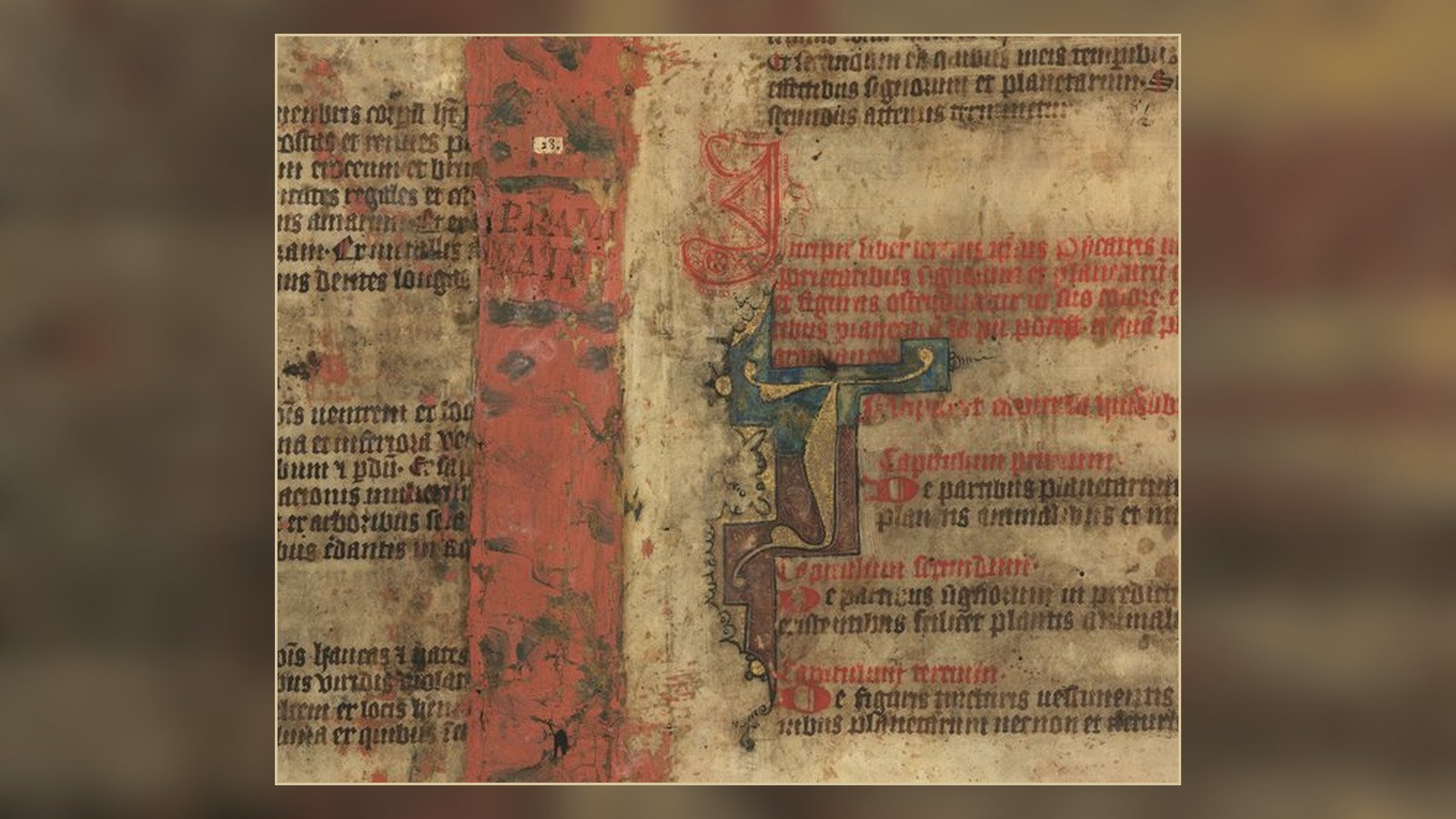
The enduring importance of Picatrix grimoire lies in the convergence of text and object. A title alone cannot show how the work changed: one must examine handwriting, parchment or paper, pigments, bindings, ownership notes, omissions and the order in which separate texts were placed together. These details reveal whether a copy was made for use, collection, instruction, defence or concealment. They also show why modern printed editions, however valuable, can create the illusion of a stable book where the historical record preserves a family of changing witnesses.
Institutional catalogues have become essential to this reconstruction. Shelf marks that appear dry or technical are the coordinates of survival. They identify the exact volume, distinguish one recension from another and prevent famous titles from absorbing unrelated material. For SatanWorld, those catalogue identities are treated as part of the story: the route from private hand to royal cabinet, confiscated collection, antiquarian sale or national library explains how forbidden knowledge crossed the centuries.
The visual record is equally important. A circle, initial, seal, table or miniature cannot be replaced by a verbal summary without loss. Images determine the pace of reading and often carry information that the words do not explain. For that reason, this article presents historical images with their holding institution and reuse status, while original editorial diagrams are clearly identified as modern explanatory work rather than manuscript facsimiles.
What the Darkness Preserved
The Picatrix and the Architecture of Astral Magic belongs to forbidden history because the work survived a repeated conflict over who could possess knowledge and by what authority. The danger attributed to it changed with time: demonic assistance, unauthorised revelation, unlawful prosecution, secret communication, intellectual pride or the fear that a diagram might make inaccessible power portable. Yet each generation that feared the material also helped define and preserve it.
The final mystery is therefore not only whether a spirit appeared, a talisman received celestial force or a prayer transformed memory. It is why human beings continued to copy these instructions when copying was slow, possession could be dangerous and many of the names were barely understood. The answer lies somewhere between faith, ambition and the refusal to accept that the visible world contains all available knowledge.