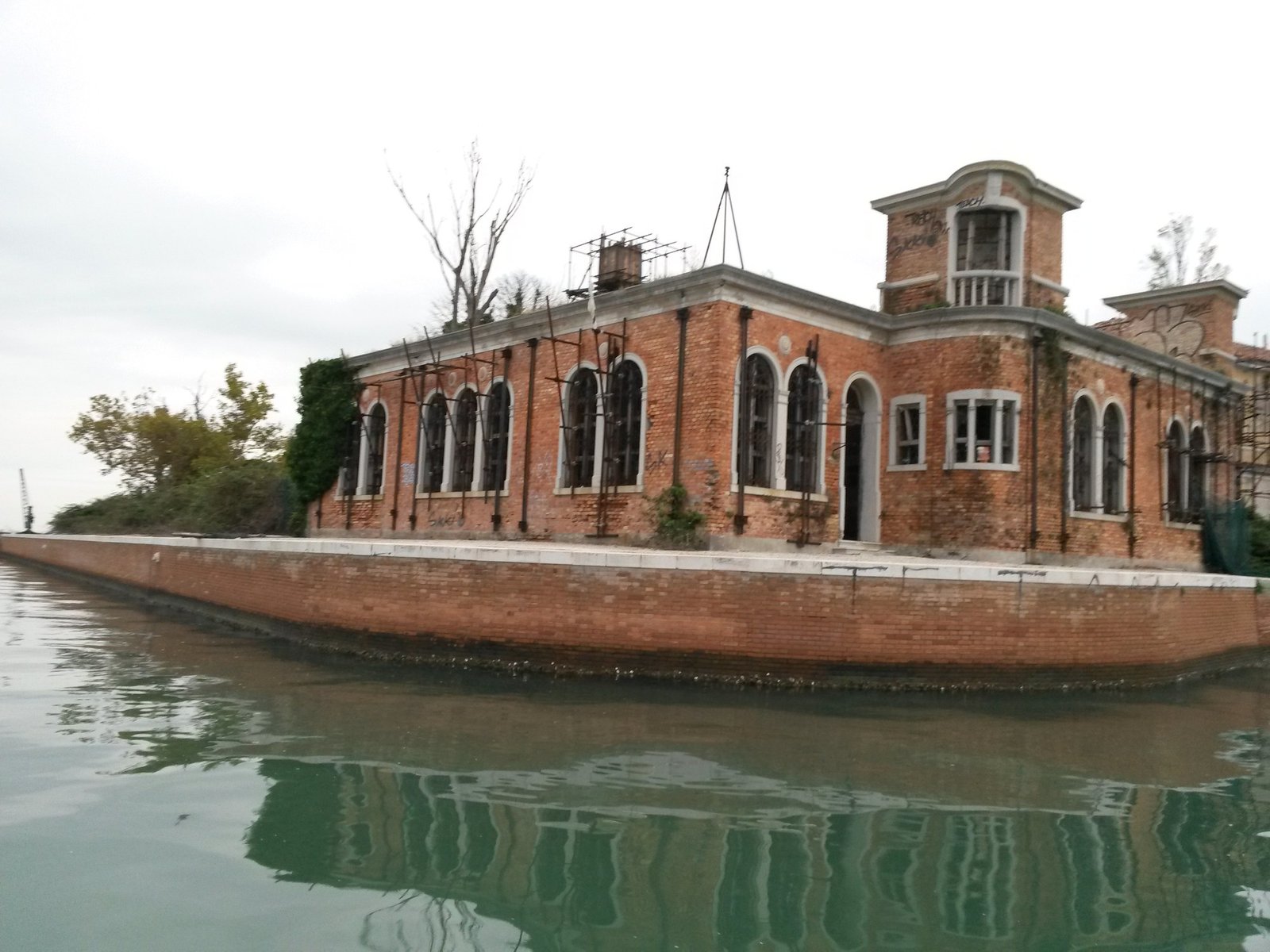
Poveglia lies low in the southern Venetian lagoon, separated from the living city by water, reeds and a silence broken only by birds and passing boats. Behind its trees stand hospital buildings whose corridors have been empty since the twentieth century.
An Island at the Gate of Venice
Poveglia occupies a strategic position near the route once used by large ships entering the lagoon through Malamocco. Its history reaches far beyond the haunted stories now attached to it. Communities lived there, military works guarded the water and the island was reshaped by war and abandonment.
After the War of Chioggia in the fourteenth century, the resident population was evacuated. Later, Venice used the site for ships, stores and maritime control. Its isolation made it useful to a republic whose survival depended upon regulating everything that crossed the lagoon.
By 1782, under the authority of the Venetian health magistracy, Poveglia served to inspect people, cargo and vessels and, when needed, to isolate suspected disease. The island became part of a wider system of quarantine that protected Venice through separation and waiting.
The Quarantine Shore
Ships arrived carrying crews from ports where sickness might be present. Goods were unloaded, aired or held. Travellers remained under observation before being permitted into the city.
During emergencies, the buildings functioned as a lazaretto. Records and inscriptions preserve the language of contagion and warning. One stone inscription dated 1793 cautioned against digging where those who had died of infection rested.
Popular retellings later multiplied the number of plague dead and described vast fields of ash. The official history is more measured: Poveglia was one element in Venice’s long sanitary network, a place where illness, fear and enforced isolation accumulated over generations.
The Hospital Years
Poveglia continued to serve health functions through the nineteenth century and into the twentieth. Existing buildings were adapted for institutional care, eventually operating as a geriatric and long-term hospital rather than the legendary secret asylum often described online.
Patients and staff lived within a closed world of wards, treatment rooms, kitchens, laundry buildings and chapel spaces. The bell tower, converted from the remains of an older church, rose above the roofs and became the island’s most recognisable landmark.
The institution closed in 1968 or 1969. Furniture, baths, metal frames and medical fittings remained in decaying rooms. Vegetation entered through broken roofs. The site passed into state ownership and became increasingly inaccessible.
The Doctor in the Tower
A later legend tells of a doctor who performed brutal experiments on patients, lost his mind and fell—or was thrown—from the bell tower. Some versions say he survived the fall only to be suffocated by a dark mist rising from the ground.
No secure archival record has identified this doctor or confirmed the dramatic experiments attributed to him. Yet the story became inseparable from the island because it gave the abandoned institution a single human villain and the dead a moment of revenge.
The sealed tower, empty wards and medical debris provided the architecture the legend required. Once the hospital closed, every rusting instrument could be interpreted as evidence and every dark window as a witness.
Voices Across the Lagoon
Fishermen and boatmen have long been said to avoid the island or speak of it with discomfort. Visitors describe oppressive silence, footsteps inside empty buildings, shadows crossing corridors and voices carried from rooms with no occupants.
Urban explorers and journalists who entered illegally or with special access reported the constant noises of decay: loose shutters, birds, wind in damaged roofs and water moving against the walls. Some also described objects changing position or a sense of being watched.
The island’s reputation grew through television investigations and online lists naming it among the world’s most haunted places. Poveglia became a global symbol of accumulated suffering even as much of its popular history drifted away from the archive.
The Bell That Does Not Ring
The bell tower dominates photographs of Poveglia, though its bell was removed long ago. Haunted accounts sometimes claim it can still be heard at night.
Across the lagoon, real church bells travel enormous distances over water. Their sound can reach the island without revealing its source. In darkness, the distinction between a bell from the living city and one imagined inside the abandoned tower becomes difficult to hold.
That uncertainty gives Poveglia its strongest atmosphere. Venice remains visible, luminous and inhabited. The island sits close enough to see civilisation and far enough to remain excluded from it.
An Island Reclaimed
In recent years, the civic association Poveglia per Tutti has worked to keep the island in public hands and protect it from speculative development. Part of the northern area entered community stewardship in 2025, with plans centred on nature and local use.
The southern buildings remain dangerous and largely closed. Their decay continues, but the island is no longer only an abandoned stage for ghost stories. Venetians are attempting to recover a place whose history includes community, maritime defence and public health as well as isolation.
The haunted legend will not disappear. It has become part of Poveglia’s modern identity. But the true darkness lies not in invented numbers. It lies in the function of the island itself: a shore where the sick waited outside the city, where the dead were warned against disturbance and where institutional rooms were finally locked and left to the lagoon.
From Refuge to Lagoon Community
Poveglia’s recorded history begins in the early medieval lagoon, when islands offered refuge from invasion and political instability on the mainland. Tradition places settlers there as early as the fifth century. By the ninth century, documents show an organized community governed within the Venetian world.
The island’s name appears in changing forms—Popilia, Poveggia, Poveglia—across centuries. Houses, a church and cultivated ground occupied a place now imagined only as institutional ruin. Its inhabitants fished, traded and participated in the complex network of lagoon settlements that fed Venice.
During the War of Chioggia between Venice and Genoa, the population was removed in 1379 as military danger approached. An octagonal defensive work was established in the following period to guard the Malamocco channel. The evacuation broke the continuity of civilian life. Poveglia would thereafter be valued less as a community than as a controlled threshold.
That transformation prepared its later darkness. Venice repeatedly used islands to separate danger from the city: powder, soldiers, travellers, goods and disease could all be placed across water. Poveglia’s isolation was not accidental scenery. It was the purpose for which the Republic preserved it.
The Venetian Republic and the Architecture of Quarantine
Venice had developed maritime quarantine institutions centuries before Poveglia became a formal station. The word lazaretto belongs to the lagoon’s history, where public-health magistrates created systems for examining ships and holding people or cargo suspected of infection.
In 1776 Poveglia was assigned a sanitary role, and in 1782 buildings were adapted as an inspection and quarantine station. Vessels entering through Malamocco could be directed there. Crews, passengers and goods waited under the authority of health officials before proceeding toward Venice.
The island’s boundaries were reinforced by procedure. Documents, watchmen, fumigation, airing and time itself formed part of quarantine. A person could see the towers of Venice and still remain forbidden to approach them. Disease was treated as an invisible passenger that might reveal itself only after days of confinement.
During outbreaks in the late eighteenth and early nineteenth centuries, Poveglia received the sick and the dead. An inscription warning against disturbing ground associated with contagion preserved the fear that infection might remain beneath the soil. Such stones turned burial into a permanent boundary between the living and what had been isolated.
The Church and the Bell Tower
Poveglia once had a church dedicated to San Vitale. The church was demolished in the early nineteenth century, but its bell tower remained and was adapted as a lighthouse or navigational marker. The tower now rises above trees and abandoned roofs, the most visible surviving structure on the island.
The absence of the church creates one of Poveglia’s most haunting architectural facts. A bell tower stands without the sacred building it served. Popular stories claim the bell can still be heard, although no functioning bell calls a congregation. The empty tower has become a vertical witness over a community, hospital and quarantine ground that no longer exist.
From the water, the tower gives Poveglia a silhouette like a village. Closer inspection reveals sealed windows, roofless rooms and vegetation growing through institutional courtyards. The island appears inhabited from a distance and abandoned only when approached.
The Twentieth-Century Institution
In the twentieth century, Poveglia’s buildings were used for health and social care. Sources describe geriatric, convalescent or long-term hospital functions rather than the secret criminal asylum of modern legend. Patients and staff lived within a self-contained complex that included wards, service areas, kitchens, baths and agricultural land.
The distinction does not make the site less severe. Long-term institutions gathered people who were elderly, chronically ill or removed from ordinary family life. Water separated residents from the city. Transfers required boats; departures were controlled by administration and health.
The hospital closed around 1968–1969. The state retained the property, but buildings were not given a stable new use. Beds, bathtubs, cabinets and tiled rooms deteriorated. Windows opened to rain. Roots entered foundations. Decay erased labels while leaving the forms of care visible.
Abandonment transformed medical space into occult space. A rusted bed frame no longer belonged to a named patient; it became evidence of suffering in general. A treatment room became a chamber. The hospital’s silence allowed every anonymous life once contained there to merge with the older dead of quarantine.
The Doctor Who Fell
The most famous Poveglia legend tells of a physician who experimented upon mentally ill patients. He is said to have performed crude operations in search of cures, ignoring screams and treating the island as a place beyond supervision. Eventually, the spirits of his victims drove him to the bell tower.
He fell from the height but did not die immediately. A nurse or witness later claimed that a dark mist rose from the ground and suffocated him. His body was buried on the island, joining the patients he had tormented.
No name or secure institutional file has anchored this doctor in the historical record. The tale survives because it unites the island’s dominant images: hospital, tower, experiment, fall and the revenge of the dead. It gives supernatural agency to those whose identities have disappeared from the wards.
Within the legend, the doctor is not merely punished by madness. He is seized by the accumulated presence of the island. Poveglia itself appears to reject the man who believed isolation placed him beyond judgment.
Testimony of Visitors and Boatmen
Boatmen have been described as reluctant to land, especially after dark. Fishermen are said to avoid surrounding shallows for fear of disturbing human remains. Stories of nets drawing up bones belong to the island’s oral atmosphere, repeating the belief that the dead lie close beneath mud and roots.
Those who have entered the abandoned buildings report footsteps, voices, doors moving and an oppressive sensation that intensifies in the hospital corridors. Paranormal crews have recorded electronic sounds and sudden changes in emotion. Urban explorers describe the more physical dangers of collapsing floors, broken glass, unstable roofs and illegal access.
The island produces noise even when empty. Birds nest inside walls. Wind moves through open frames. Water strikes masonry. Loose metal shifts. These sounds do not weaken the experience; they create a language in which an approaching footstep can form from ordinary decay and continue after the listener stops moving.
Several accounts describe an urgent feeling of being told to leave. Whether heard as a voice or experienced as pressure, the warning has become Poveglia’s most consistent modern message. The island does not invite visitors deeper. It appears to defend its separation.
Plague Memory and the Soil
Venice endured repeated epidemics, and its quarantine islands became landscapes where civic survival required individual confinement. Poveglia’s exact number of dead cannot be reduced to the vast figures repeated in popular media, but death and contagion are authentically part of its sanitary history.
The power of the plague narrative comes from accumulation. No single burial needs to explain the island’s reputation. Generations arrived under suspicion of carrying disease; some recovered and departed, others did not. Clothing, cargo, bedding and bodies passed through procedures designed to prevent invisible transmission.
Soil associated with infection was treated with fear because it could preserve both remains and memory. The inscription warning against excavation made the earth itself part of the quarantine. Long after medical danger passed, the prohibition remained easy to understand: do not open what the island was built to contain.
Abandonment, Sale and the Fight for Poveglia
In the twenty-first century, proposals to lease or sell the island raised concern that it would become a private resort. In 2014, the Italian state offered a long lease through auction. A citizen movement, Poveglia per Tutti, formed to keep the site accessible and recover it for collective use.
The campaign reframed Poveglia not as a forbidden island but as neglected public heritage. Volunteers and supporters emphasized its seven hectares of landscape, history and potential. Their work challenged the idea that the only futures available were luxury development or permanent ruin.
Yet the buildings continue to decay, and ordinary access remains restricted. The boundary that once served the health magistracy survives through law, water and physical danger. Poveglia remains visible but difficult to enter—the perfect condition for legend.
The Island’s Layered Dead
Poveglia is often described as though one catastrophe created it. In truth, its atmosphere comes from layers: medieval abandonment, military control, quarantine, burial, institutional care and modern neglect. Each period left structures or stories that later generations placed over the last.
The island’s ghosts therefore have no single costume. They are plague victims, patients, residents, soldiers, attendants and the imagined doctor in the tower. The lack of named testimony allows them to merge into a collective presence associated with isolation itself.
Across the lagoon, Venice remains illuminated and crowded. Poveglia lies within sight of it, dark behind trees. That nearness makes the separation more disturbing. The island is not at the edge of the world. It is beside one of its most visited cities, holding a history the water has kept apart.
The Water Keeps the Boundary
Poveglia is not frightening because it is impossibly remote. It is frightening because Venice can be seen from it. Life continues across the water while the abandoned buildings remain inside their trees.
The island’s history has been exaggerated, but exaggeration grew from genuine layers of quarantine, disease, institutional care and abandonment. Every later tale found a place prepared to receive it.
At sunset, the lagoon turns dark around the walls and the bell tower becomes a black vertical shape. The city lights appear in the distance. Between them lies water—the oldest and most effective boundary between Poveglia and the living.