At ten minutes to one on the morning of 4 July 1840, Edward Drury looked up from his watch inside the house at Willington Mill. A closet door opened. A woman in grey stepped out with her head bowed and one hand pressed against her breast. She moved toward him. Drury rushed forward with a scream, fell across his companion and remembered nothing clearly for almost three hours.
The House Beside the Mill
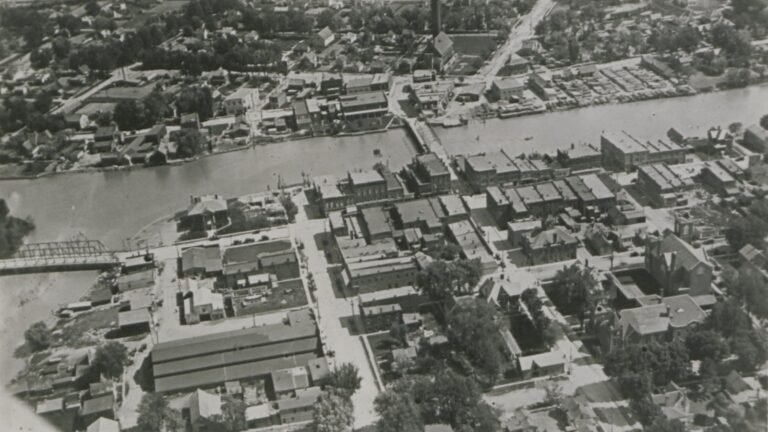
The steam corn mill at Willington, Northumberland, and its adjoining dwelling were built in 1800. In 1806 the property was purchased by the firms or families of Unthank and Procter. Joseph Procter, a member of the Society of Friends, moved into the house with his wife in 1831.
The site stood apart from surrounding buildings, bordered on three sides by a watercourse. The mill, house and industrial yard formed their own small world. Machinery, carts and flowing water supplied familiar noises, but the Procters learned the ordinary sound of the place. What began around 1834 did not resemble it.
Later writers emphasized the family’s Quaker background. The Procters were associated with restraint, plain speech and moral seriousness. Their account did not arise from a household known for séances or gothic entertainment. The haunting entered a working mill family.
Footsteps Behind the Servants
The first disturbances were sounds. Servants crossing the yard to fasten the garden gate heard footsteps following them. When they turned, no one was there. The steps kept the distance of a person walking close behind.
Inside the house came a heavier noise. Joseph Procter heard what seemed to be a weight dropping from the roof, striking through floor after floor with a thump at each level until it reached the bottom. The sound implied an impossible passage through solid structure.
At other times the kitchen erupted as if furniture or utensils were being thrown about. When the family descended, nothing had moved. The invisible disturbance acquired the familiar household name “the ghost,” but familiarity did not make the nights safe.
The Water Cart That Never Moved
Thomas Mann, foreman at the mill, knew the distinctive creak of a water cart in the yard. One day he heard it being dragged away. He followed the noise, expecting to see the vehicle in motion. The yard was empty, and the cart remained in its ordinary place.
The phenomenon imitated known sounds with precise detail. It did not produce only vague knocks. It reproduced footsteps, movement and the voice of a servant. Mrs. Procter once called to the nurse and heard an answer from the nursery. The room was empty, and the nurse was outside.
A child of the family later remembered hearing what he believed was the nurse moving in an upstairs room, only to find no one there and learn that she was not even in the house. The presence appeared to study domestic sound and return it without a body.
Joseph Procter’s Letter of 1835
On 2 June 1835, Procter wrote to a Mr. Parker of Halifax describing the disturbances. He stated that the family had become aware of them at the beginning of the year, though they appeared to have existed earlier.
The letter also referred to several credible witnesses who had seen an apparition of a woman in grave-clothes outside the house on four separate occasions. By this early date, the haunting had crossed from sound into form.
The existence of the dated letter anchors the Willington case close to the beginning of the events. It was not created only after decades of family storytelling. Procter documented the disturbance while living inside it.
The Weight Falling Through the Floors
The falling noise became one of Willington’s signatures. It started above, then struck downward in stages, as if an immense body passed through ceilings without breaking them. The family could follow its progress by sound.
Such a manifestation turned the vertical structure of the house into an instrument. Bedrooms above, rooms below and the roof between them no longer formed barriers. The unseen weight crossed all levels while leaving plaster and boards intact.
For children and servants, the effect must have been oppressive. A footstep belonged to a corridor; this sound belonged nowhere. It suggested that the house was being penetrated from above by something too heavy to remain invisible.
The Beds Rise
Visitors and members of the family reported beds lifting or shaking beneath them. Two female relatives of Mrs. Procter felt their bed raised and the curtains drawn upward. Then they saw a female figure emerge from the wall, bend over them and pass back into it.
The women refused to sleep in the room again. One moved to another part of the house; the other went to stay at the foreman’s dwelling nearby. The apparition had transformed the most enclosed and vulnerable space—the curtained bed—into a point of entry.
Mrs. Procter experienced a bed lifting while she was with an infant and nurse. She told only her husband. The following night another person, unaware of the first event, reported the same sensation privately. The repeated experience gave the family a pattern independent of shared discussion.
The Cold Hand
One night Mrs. Procter felt a cold hand placed upon her chest. Nothing was visible. The intimacy of the contact haunted her long after the events; later accounts state that she could not remember it without shuddering.
A young son repeatedly complained that a large dog had crawled beneath his bed and lifted it. Adults found no animal. The child’s description gave the unseen force a familiar shape, but one that existed only through pressure below the mattress.
All the while, small feet seemed to patter across the upper floor. The house contained several scales of movement: the heavy body falling through levels, adult steps on stairs, and rapid childlike feet overhead.
The Figure Outside the Window
After one of Mrs. Procter’s sisters moved to the foreman’s house, she witnessed another apparition outside the mill dwelling. Thomas Mann, his wife and daughter also saw it.
They described a bare-headed male figure in a flowing robe resembling a surplice. It glided backward and forward roughly level with a second-storey window, about three feet above the ground. The figure seemed to enter the wall at each side.
It then stopped at the window. Part of the luminous body appeared to pass through the lowered blind and glass, interrupting the visible framework. The light faded from bright to blue and disappeared from the head downward.
Edward Drury Comes to Test the House
Edward Drury of Sunderland approached the story with curiosity and scepticism. He requested permission to spend a night in the empty house. On 3 July 1840, he arrived with a companion, T. Hudson, described as a medical man in later accounts.
Drury brought pistols, intending to expose any person attempting a trick, but after meeting Procter and inspecting the premises, he left them unloaded. The men searched the house. The upper rooms were unfurnished. The closet associated with the apparition was too shallow to conceal a person.
They settled on the third-storey landing shortly before midnight. Drury expected to explain whatever he heard “in a most philosophical manner.”
Bare Feet at Midnight
At about ten minutes to twelve, both men heard what sounded like many people pattering barefoot across the floor. The direction was difficult to locate. Then came knocking among their feet, followed by a hollow cough from the room connected with the apparitions.
A rustling noise moved against the wall and up the stairs. Hudson refused to go to bed before daylight. Drury sat reading a note and checked his watch.
When he lifted his eyes, the closet door opened. The time was ten minutes to one.
The Woman in Grey
Drury described a female figure in greyish garments. Her head inclined downward. One hand pressed against her chest as if in pain; the other extended toward the floor with the index finger pointing down.
She advanced cautiously across the room. As she neared Hudson, who was dozing, the figure extended a hand toward him. Drury rushed at it, giving what Procter remembered as an awful yell.
He grasped nothing. He fell upon his companion and lost clear awareness. Others carried him downstairs in an agony of fear. In his signed letter dated 13 July 1840, Drury certified the account as true and correct.
The Brother on the Stair
A brother of Mrs. Procter entered the house determined to challenge any invisible visitor. In bed, he heard a heavy step climbing the stairs. A thick stick seemed to strike each baluster as the presence approached.
The steps stopped at his door. He tried to call out, but his voice failed. When he opened the door, no one stood there. The same steps then descended visibly empty stairs before his face, striking the balusters as they went.
He found Procter awake; both had heard the movement. They searched below with a light and found no cause.
Forty Witnesses
Servants, relatives, mill workers, visitors and investigators reported phenomena. Procter stated that he could produce forty witnesses to the supernatural visitations associated with the house.
The breadth of testimony made Willington different from a single apparition seen once. Some heard imitation voices; some watched light outside the window; some felt beds lifted; Drury saw the woman in grey. The experiences overlapped without being identical.
The haunting also attracted crowds. People came day after day hoping to see or hear what had disturbed the Procters. Public attention turned the industrial house into one of northern England’s most discussed haunted sites.
The Family Leaves
The disturbances gradually became less frequent. In 1847, the Procter family left the house. During later occupation by the clerk, foreman and their families, the manifestations reportedly ceased.
The ending did not supply an identified ghost or resolved history. No discovered body explained the woman. No confession accounted for the sounds. The force seemed linked to the Procters’ years of residence and withdrew when they did.
The mill and house later changed with industry and development. The physical stage did not remain untouched, but the family’s papers preserved its rooms.
From Family Papers to Psychical Research
William Henderson published a detailed account in his 1866 study of northern folklore, drawing on information from a son of the family. Later, Edmund Procter assembled material for the Society for Psychical Research. The case entered the society’s journal in the early 1890s.
Andrew Lang and other writers reproduced parts of the testimony. The Drury letter became especially important because it was dated close to the experience and written by a visitor who had expected a natural explanation.
The archive grew in layers: Joseph Procter’s early letter, family memory, Drury’s signed statement, Henderson’s account and the psychical-research collection. Together they preserve one of Britain’s richest nineteenth-century haunting records.
The Empty Room Above
Willington Mill is remembered through upward sound. The nurse moves in an empty room. Bare feet cross the third storey. A weight falls from the roof through every floor. The haunting always seems to occupy the level just beyond sight.
Its apparitions also cross boundaries: a woman emerges from a wall; a luminous man passes through a blind and window; a cold hand touches a living chest without an arm attached. Architecture fails repeatedly to contain the presence.
The final image belongs to Drury. He entered armed with scepticism and pistols, inspected the closet and sat waiting for a trick. When the door opened, he saw the woman advance. His scream woke the house, but the figure left no footprint. The witness left only a letter.
The Servants Who Would Not Stay
Domestic servants experienced the house at its most exposed hours: fastening gates after dark, crossing passages before the family rose and sleeping near the rooms where the footsteps gathered. Henderson’s account states that servants remained in constant fear and changed frequently.
Their departures altered the household’s practical life. A mill owner’s home required nurses, maids and workers moving between house and yard. Each replacement entered a building already known locally as haunted and soon heard the same stories through walls and floors.
The pattern also widened the witness circle beyond relatives. A servant who had not lived through the first disturbances could independently hear the imitated voice or steps. The haunting renewed its audience whenever the staff changed.
Children Growing Up With the Ghost
The Procter children were young enough that supernatural interpretation came after sensation. One remembered believing the nurse occupied an empty room. Another described the bed-lifting force as a large dog. Their language was concrete because they lacked the adult framework of apparition.
This childhood testimony carries a different weight from Drury’s dramatic encounter. The children did not arrive seeking proof. They attempted to fit repeated physical experiences into familiar categories: a nurse, a dog, feet on a floor.
Years later, a son supplied Henderson with information and confirmed the family history. The haunting had become part of their upbringing, a domestic presence understood fully only when they were old enough to recognize how abnormal it had been.
The Mill as a Machine of Sound
A steam corn mill generated vibration, water noise, carts, workers and moving equipment. Any serious reconstruction must acknowledge that environment because the witnesses themselves knew it intimately. The foreman’s recognition of the water cart depended upon years of listening to the real machine.
The haunting repeatedly imitated sounds that belonged to the property while separating them from their cause. A cart creaked without moving. A servant answered while absent. A heavy object fell through intact floors. The phenomenon did not compete with the mill’s noise; it used its vocabulary.
This precision is why ordinary industrial sound did not satisfy the household. The witnesses followed the familiar noise to its expected source and found stillness.
The Unidentified Woman
No secure identity was established for the female apparition. Later retellings searched for deaths, local tragedies and former occupants, but the early documents leave her unnamed. She appeared in grave-clothes outside, emerged from a wall above a bed and advanced from the closet before Drury.
Her repeated gesture in Drury’s account—one hand pressed against the chest and the other pointing downward—suggested pain and direction. The witness did not remain conscious long enough to test what she indicated. No discovery beneath the floor completed the message.
The absence of identity preserves the case’s deepest uncertainty. Willington contains unusually precise testimony about how the figure moved, yet almost nothing about who she was or what she wanted.
The witnesses never identified a demand, warning or release. The phenomena simply occupied the household until the family left, leaving sound, gesture and fear without a final explanation.
Sources and Further Reading
- Joseph Procter’s letter of 2 June 1835 describing the early disturbances.
- Edward Drury’s signed letter of 13 July 1840 concerning his vigil.
- William Henderson, Notes on the Folk-Lore of the Northern Counties, 1866.
- Edmund Procter’s collection published in the Journal of the Society for Psychical Research, 1891–1892.
- Andrew Lang, The Book of Dreams and Ghosts.