In the darkness around the Bell family farm, something moved through the fields in forms that did not remain natural for long. Soon the house began to answer with scratches, chains and a voice that knew the family by name.
The Farm on the Red River
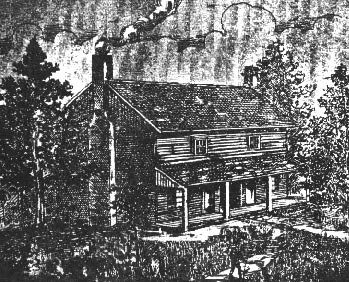
John Bell moved from North Carolina to the Red River settlement in Tennessee in the early nineteenth century. The family established a prosperous farm in what is now Adams, Robertson County. The house stood amid fields, woodland and the long isolation of frontier roads.
The first sign was said to appear in 1817. John Bell saw a strange animal in a cornfield, described as having the body of a dog and the head of a rabbit. He fired at it, but the creature vanished. Other family members reported a large black bird and an unfamiliar dog following them.
These sightings might have remained scattered curiosities had the house not begun to produce sounds. Knocking came from the doors and walls. Scratching moved across the boards. The noise of chains seemed to drag through rooms where no chain could be found.
Something Enters the House
At night, the children heard rats gnawing inside their bedposts, yet searches found nothing. Bedcovers were pulled away. Invisible hands pinched and struck. Betsy Bell, John and Lucy’s young daughter, became a particular target.
Betsy was slapped, scratched and tormented as she tried to sleep. The assaults were sometimes witnessed through their effects: hair pulled upward, skin marked, blankets torn away. The family attempted to keep the disturbances private, fearing ridicule and the damage that rumours could bring.
Eventually John Bell confided in neighbour James Johnston. Johnston and his wife spent a night in the house. According to the traditional account, their bedcovers were pulled away repeatedly. By morning, Johnston accepted that the Bell family faced something beyond ordinary mischief.
The Voice Called Kate
The presence developed from whispers into clear speech. It could sing hymns, quote scripture, repeat sermons heard miles apart and converse with visitors. It sometimes appeared to be in several places at once.
The entity became known as Kate, often linked in later tradition to Kate Batts, a neighbour who had quarrelled with John Bell over a transaction. The spirit itself offered changing identities. At times it called itself a spirit from everywhere—Heaven, Hell, the earth and the air. Its contradictions made it harder to contain within the story of one dead woman.
Kate could be playful with visitors and tender toward Lucy Bell, whom it called the finest woman alive. Toward John Bell and Betsy, it was cruel. It mocked the father and interfered with the daughter’s courtship. The voice seemed to understand every weakness inside the household.
Visitors to the Bell Home
News spread through the settlement. People travelled to hear the voice and witness the disturbances. The Bell Witch became a public intelligence, answering questions, insulting doubters and performing before rooms of listeners.
One tradition claims that General Andrew Jackson visited with several men. As the party approached, a wagon allegedly stopped as though held by an invisible force. A voice announced its presence and promised further entertainment after dark. Jackson is said to have declared that he would rather face the British Army again than spend another night with the Bell Witch.
The Jackson episode appeared in later accounts and became one of the legend’s most famous scenes. Whether preserved from oral memory or enlarged over generations, it expresses the scale the haunting had reached: even a national military figure could be made powerless on the road to the Bell farm.
Betsy Bell and Joshua Gardner
Betsy Bell’s relationship with Joshua Gardner drew particular hostility. The voice followed them, interrupted conversations and insisted that Betsy must not marry him. The pressure became relentless.
The young couple eventually ended their engagement. Tradition treats the separation as one of Kate’s victories. The reason for the entity’s hatred of the match was never clearly explained, though later storytellers connected it to family disputes and hidden resentments.
The torment of Betsy gives the legend its most intimate cruelty. The spirit did not merely haunt a building. It interfered with the future of a young woman and turned private affection into an arena for invisible command.
The Death of John Bell
John Bell’s health declined. He suffered episodes that affected his face and speech, and Kate announced that she intended to kill him. On 20 December 1820, the family found him in a stupor.
A small vial was discovered in the cupboard in place of his usual medicine. The voice reportedly claimed to have given him a dose during the night. When the liquid was tested on a cat, the animal died. John Bell did not recover.
At the funeral, Kate was said to sing drinking songs and laugh until the mourners left the grave. The image fixed the spirit’s character forever: not a sorrowful ghost but an intelligence that celebrated the death it had promised.
The Return Promised
After John Bell’s death, the phenomena diminished. Kate told the family she would return in seven years. In 1828, the presence reportedly spoke again with John Bell Jr., discussing religion, civilisation and future events.
The spirit then promised another return after 107 years. Stories of renewed activity gathered around 1935, giving the legend a second life in newspapers, theatre and local memory. The Bell Witch became less a closed haunting than an appointment across generations.
The original Bell house no longer stands. The cave associated with the legend became part of the landscape of modern visitation, though the earliest narratives focused primarily on the farm and household. Roads, markers and performances now keep the name alive in Adams.
The Bell Family Comes to Tennessee
John Bell was born in North Carolina and married Lucy Williams in 1782. In 1804 the family moved west into the Red River country of Tennessee, settling near the community that would become Adams. John acquired land, farmed successfully and held a respected place in the local Baptist community. The household included sons and daughters growing up in a landscape where neighbours might live miles apart and news travelled through church, mills and family visits.
The Red River settlement was not an empty wilderness. It was a developing agricultural district marked by disputes over land, debt and reputation. Yet darkness arrived quickly beyond cleared fields. Forest pressed against roads, and households depended upon one another when sickness, accident or threat came after sunset.
In later family tradition, John first encountered the strange animal in 1817. It crouched between corn rows, possessing features that did not belong together. He fired, but there was no body and no trail. Similar creatures appeared to other family members: a black dog, an enormous bird, shapes that moved as though the presence were trying different forms before entering the house.
The sounds began softly—scratching outside, gnawing near bedposts, tapping on doors. Searches found no animal. The disturbance followed the family from wall to wall. At night, it grew bold enough to pull blankets and strike the children. The Bell home became the point at which an old frontier fear took on a personal intelligence.
James Johnston’s Vigil
John Bell attempted to conceal the events. Publicly admitting that an invisible force had invaded the house could expose the family to ridicule or religious suspicion. As the assaults worsened, he confided in James Johnston, a neighbour whose judgment he trusted.
Johnston and his wife came to spend the night. According to the traditional account, their covers were pulled away repeatedly. Johnston challenged the unseen force in the language he might have used against a badly behaved child, but the attacks continued. By morning, he told Bell that the phenomenon deserved wider attention.
This vigil is crucial to the legend because it marks the transition from family ordeal to community case. Neighbours began to sit in the house. Ministers came to pray. Visitors asked questions of the sounds. What had hidden in the walls developed under attention into whispers and then into speech.
A Voice Without a Body
At first the voice was faint, as though speaking from a distance or through the boards. It strengthened until those present could understand words. It recited hymns and scripture, answered questions and repeated sermons said to have been delivered at the same hour in different places. On one celebrated occasion, it reportedly gave the substance of two ministers’ sermons in distinct voices.
The entity supplied multiple identities. It claimed at times to be a spirit, at others one of several spirits. The name “Kate” attached itself to the case through an association with Kate Batts, a neighbour connected in tradition to a dispute with John Bell. The voice itself became known as Kate because it possessed the conversational cruelty of a person who knew the household.
Kate did not treat everyone alike. She professed affection for Lucy Bell, calling her a good woman and singing to her during illness. She mocked John, tormented Betsy and entertained certain visitors. This discrimination made the presence seem less like random noise than a mind with preferences, grudges and a memory.
It debated theology with ministers and exposed private information. Questions were put in languages or about events thought unknown to the family. Traditional accounts say the voice answered with unsettling accuracy. The more it performed, the more the Bell farm became a destination for people seeking to hear an intelligence without a body.
Betsy Bell Under Attack
Elizabeth “Betsy” Bell was an adolescent when the disturbances centred upon her. She reported pinching, slapping and scratching. Witnesses said her hair was pulled and her face marked while no visible hand touched her. Needles were said to appear in bedding. The attacks could begin during conversation and continue until she cried out.
Kate took a particular interest in Betsy’s relationship with Joshua Gardner, a young man from a nearby family. The voice interrupted their meetings, followed them and declared that they must not marry. It repeated private conversations and turned courtship into public torment.
The engagement ended. Later tellings have searched for hidden family motives behind the entity’s hostility, but inside the legend the command belongs to Kate. She interfered not merely with sleep or property but with a young woman’s future, demonstrating that the haunting could reach beyond the farmhouse into marriage and social life.
Betsy eventually married Richard Powell, a former teacher considerably older than she was. Powell appears in Bell Witch tradition as a man who may have possessed knowledge of occult subjects or harboured his own interest in Betsy, though such suggestions belong to later interpretation. What remained constant was the belief that Kate had succeeded in separating Betsy from Gardner.
Visitors at the Bell Farm
As the story spread, the house attracted neighbours, clergy and curious travellers. One visitor, William Porter, attempted to trap the witch in a blanket after the presence climbed into bed beside him. He seized a heavy form and carried it toward the fire, but the bundle became unbearably foul and heavy. He released it before reaching the flames.
Another visitor tried to expose a supposed witch hunter who claimed power over the entity. Kate mocked or struck those who boasted. The voice seemed to enjoy turning investigators into performers in its own theatre.
The most famous visitor in later tradition was Andrew Jackson, then a military hero before his presidency. A wagon carrying Jackson’s party allegedly stopped on the road to the Bell farm as though held by an unseen force. A metallic voice announced that the travellers could proceed, and Jackson declared he would rather face the British again than confront the Bell Witch. That night, a man who claimed mastery over witches was attacked until the party fled.
The Jackson episode was published long after the events and cannot be tied to a surviving contemporary diary. It nevertheless became inseparable from the legend because it placed a future president beneath Kate’s authority. In Tennessee memory, even the hero of New Orleans entered the farm only by permission of the unseen voice.
John Bell’s Decline
John’s health deteriorated during the haunting. He developed weakness and seizures or facial paralysis that affected speech and swallowing. Kate announced that she intended to kill him. The threat turned every illness into part of a promised murder.
On 19 December 1820, family members found John in a deep stupor. His usual medicine was missing from the cupboard, replaced by a small vial containing a dark liquid. The entity claimed it had administered the dose. John Jr. tested some of the liquid on a cat, which, according to the traditional narrative, convulsed and died.
John Bell died on 20 December. At the funeral, as neighbours and family followed the coffin, Kate sang a coarse drinking song and laughed. The voice remained audible until the last mourner left the graveyard. The scene gave the haunting a conclusion as cruel as its beginning: a spirit celebrating over the man whose death it had repeatedly foretold.
The Bell Manuscript and M. V. Ingram
The great difficulty in reconstructing the Bell Witch lies in the distance between the reported events and the fullest surviving publication. A brief version appeared in an 1886 history of Tennessee. In 1894, newspaper editor Martin Van Buren Ingram published An Authenticated History of the Famous Bell Witch, the book that fixed most of the familiar narrative.
Ingram said he drew upon a manuscript written in 1846 by Richard Williams Bell, one of John Bell’s sons, together with interviews and local testimony. Richard’s original manuscript has not survived independently, so readers encounter it through Ingram’s presentation. The book names witnesses, reproduces dialogue and arranges decades of oral memory into a continuous chronicle.
The lateness of the publication also reveals the strength of the tradition. For more than half a century, families in Robertson County repeated the story before it received its definitive printed form. Names such as James Johnston, Joshua Gardner and Kate Batts remained attached to particular incidents because the haunting had become part of local genealogy.
Ingram’s title used the word “authenticated” not in the modern forensic sense but as a claim that respectable people stood behind the narrative. He gathered affidavits, family recollections and the authority of community memory. His book became the grimoire of the Bell Witch: the text through which the voice could continue speaking to readers who had never entered the farm.
The Return of 1828
Kate promised to return seven years after John Bell’s death. In 1828, the presence allegedly appeared to John Bell Jr. and held long conversations about religion, politics and the future of the nation. The tone was less violent, almost philosophical, as though the intelligence that had tormented the household now wished to be remembered as an oracle.
Before leaving, it promised another return after 107 years. The date led later generations to watch 1935 for signs. Reports and newspaper stories revived, though no single manifestation equalled the original tradition. The prophecy ensured that silence itself became a countdown.
The Cave and the Living Legend
The Bell Witch Cave, located near the former farm, entered the modern geography of the story. The earliest detailed narrative centres upon the house rather than the cave, but later encounters, tours and local accounts attached the presence to its limestone chambers. Darkness, underground water and narrow passages gave the disembodied voice a physical domain after the Bell home disappeared.
Adams preserves the legend through festivals, performances, markers and family history. The Bell Witch has become Tennessee folklore, but the story has never lost its intimate core: a family gathered in a room while a voice comments upon their lives.
Most hauntings are reconstructed through glimpses. The Bell Witch speaks too much to remain a glimpse. It argues doctrine, sings at a funeral, predicts its return and names its victims. Whether called Kate, a witch or a spirit, it behaves like a presence convinced that the Bell family belongs to it.
The Voice in Tennessee Memory
The earliest known printed reference appeared in an 1886 history of Tennessee, and Martin Van Buren Ingram’s detailed account followed in 1894. By then, the events had travelled for decades through family testimony and oral tradition.
That distance does not weaken the legend’s hold. It explains its shape. The Bell Witch belongs to a frontier culture in which neighbours gathered after dark, scripture was spoken aloud and a disembodied voice could become a community event.
The entity was feared because it was intelligent. It remembered conversations, repeated distant sermons, divided its affection and declared its intentions. Most ghosts remain silent. Kate argued, sang and chose an enemy. In Adams, the most enduring sound is still the voice that promised John Bell he would not survive it.